2026年9月25日(金)17:00〜18:00、ダイヤモンド社が主催するオンラインセミナー 「創刊50周年記念 経営トピック インプットセミナー『経営戦略50年の進化』」 に、琴坂将広 が ゲスト解説 として登壇します。『DIAMONDハーバード・ビジネス・レビュー』創刊50周年記念号(2026年10月号)の第2特集 「経営戦略50年の進化を10の視座から読み解く」 を題材に、経営戦略論の枠組みがどの時代に、何を説明しようとして築かれてきたのかを辿ります。参加は無料 です。
On Friday 25 September 2026, from 17:00 to 18:00 JST, Masahiro Kotosaka will appear as guest commentator at an online seminar hosted by Diamond Inc.: the 50th-anniversary briefing seminar "Fifty Years of Strategy". Drawing on the second feature of the DIAMOND Harvard Business Review 50th-anniversary issue (October 2026), which reads fifty years of strategy through ten vantage points, it traces when the field's frameworks were developed and the questions each was designed to answer. Attendance is free.
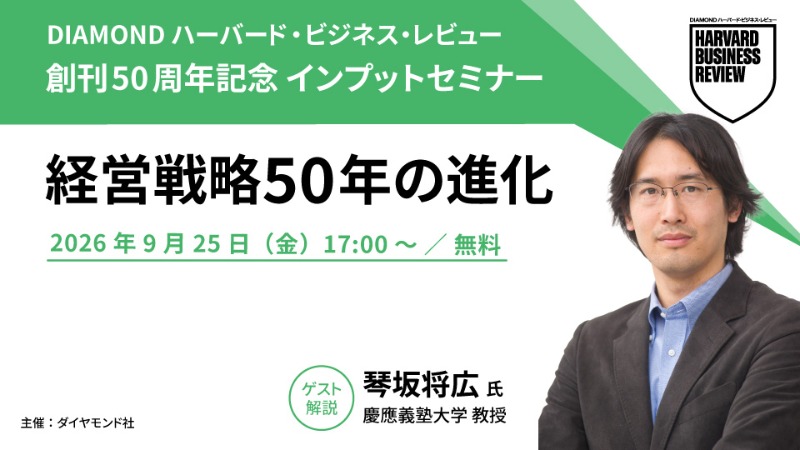
開催概要 · Event details
- 名称 — 創刊50周年記念 経営トピック インプットセミナー「経営戦略50年の進化」
- 日時 — 2026年9月25日(金)17:00〜18:00(日本時間)
- 形式 — オンライン(Zoom ウェビナー形式)
- 参加費 — 無料(申し込みにはDHBR電子版の無料会員登録が必要です)
- 主催 — ダイヤモンド社 DIAMOND ハーバード・ビジネス・レビュー編集部
- ゲスト解説 — 琴坂将広(慶應義塾大学総合政策学部教授)
- アーカイブ — 登録者に対し、開催から1週間程度でアーカイブ動画を配信予定
The seminar runs online via Zoom on 25 September 2026, 17:00–18:00 JST, hosted by the editorial team of DIAMOND Harvard Business Review at Diamond Inc. Attendance is free, though registration requires a free account for the magazine's digital edition. Those who register are due to receive a recording roughly a week after the event.
フレームワークの結論ではなく、その背後にある問いへ · Past the conclusions, to the questions behind them
実務の場では、SWOTやファイブ・フォースといった枠組みだけが切り取られて使われることがしばしばあります。セミナーの趣旨は、そうした個別のフレームワークや理論の結論を表層的に取り入れるのではなく、半世紀をかけて積み上げられてきた集合知として経営戦略論を捉える ところにあります。それぞれの枠組みが、どの時代の要請を受け、何を説明しようとして構築されたのか。その背景を辿ることが、自社に適した戦略を組み立てるうえで欠かせない、という立場です。
In practice, frameworks such as SWOT or the five forces are often lifted out of context and applied on their own. The seminar's premise is different: rather than taking the conclusions of individual frameworks at face value, it treats strategy as half a century of accumulated collective knowledge. Which demands of which era produced each framework, and what was each built to explain? Working back through that history, the argument runs, is what makes it possible to build a strategy suited to one's own firm.
特集が示す「10の視座」 · The ten vantage points
もとになる第2特集は、経営戦略論の50年を次の10の視座から整理しています。時間の都合上、セミナーではこのうち一部を取り上げます。
The feature behind the seminar organises the field's fifty years into the ten vantage points below. Given the time available, the seminar will cover only some of them.
- 経営の構造的把握(1950〜1960年代)— 代表的フレームワーク:SWOT
- 戦略的意思決定と企業の範囲(1960〜1970年代)— アンゾフ・マトリックス
- 定量的な戦略分析(1970年代)— BCGマトリックス
- 外部環境分析:マーケット・ベースト・ビュー(1970年代後半〜1980年代)— ファイブ・フォース
- 内部環境分析:リソース・ベースト・ビュー(1980年代後半〜1990年代)— VRIO
- 知識と能力の動態(1990〜2000年代)— SECIモデル
- 実践・行動としての経営戦略 — マイクロファンデーションと実践理論
- 多層的境界の戦略 — リレーショナル・ビュー
- 非市場・制度の戦略 — インスティテューション・ベースト・ビュー
- アルゴリズムとロボティクスによる新時代 — 人間中心性という大前提に挑む
The first six vantage points are tied to particular decades, from the structural understanding of management in the 1950s and 1960s through to the dynamics of knowledge and capability in the 1990s and 2000s. The last four carry no decade: strategy as practice and behaviour, strategy across multi-layered boundaries, non-market and institutional strategy, and the era of algorithms and robotics, which puts the assumption of human centrality itself in question.
視座7から10には年代が振られていません。これらは現在進行中の潮流であり、琴坂が JBpress Innovation Review のインタビュー で「4つの新潮流」として論じたものと重なります。特集全体の議論は、新刊『経営戦略の進化〈理論編〉』(東洋経済新報社)で扱った内容と地続きです。
These four are currents still in motion, and they correspond to the "four new currents" Kotosaka discussed in his interview for JBpress Innovation Review. The feature's argument follows on directly from his recent book, The Evolution of Strategic Management (Theory) (Toyo Keizai).
視聴と申し込み · Registration
視聴は無料で、下記のイベントページから申し込めます。申し込みにはダイヤモンド社の共通IDの取得(DHBR電子版の無料会員登録)が必要です。視聴用URLは登録したメールアドレスに送られます。当日はZoomウェビナー形式で行われ、司会が随時ゲストに質問を投げかける形で進みます。
Registration is free, via the event page linked below. It requires a Diamond Inc. account, which also serves as free membership for the magazine's digital edition; the viewing link is sent to the registered email address. The session runs as a Zoom webinar, with the moderator putting questions to the guest as the discussion proceeds.