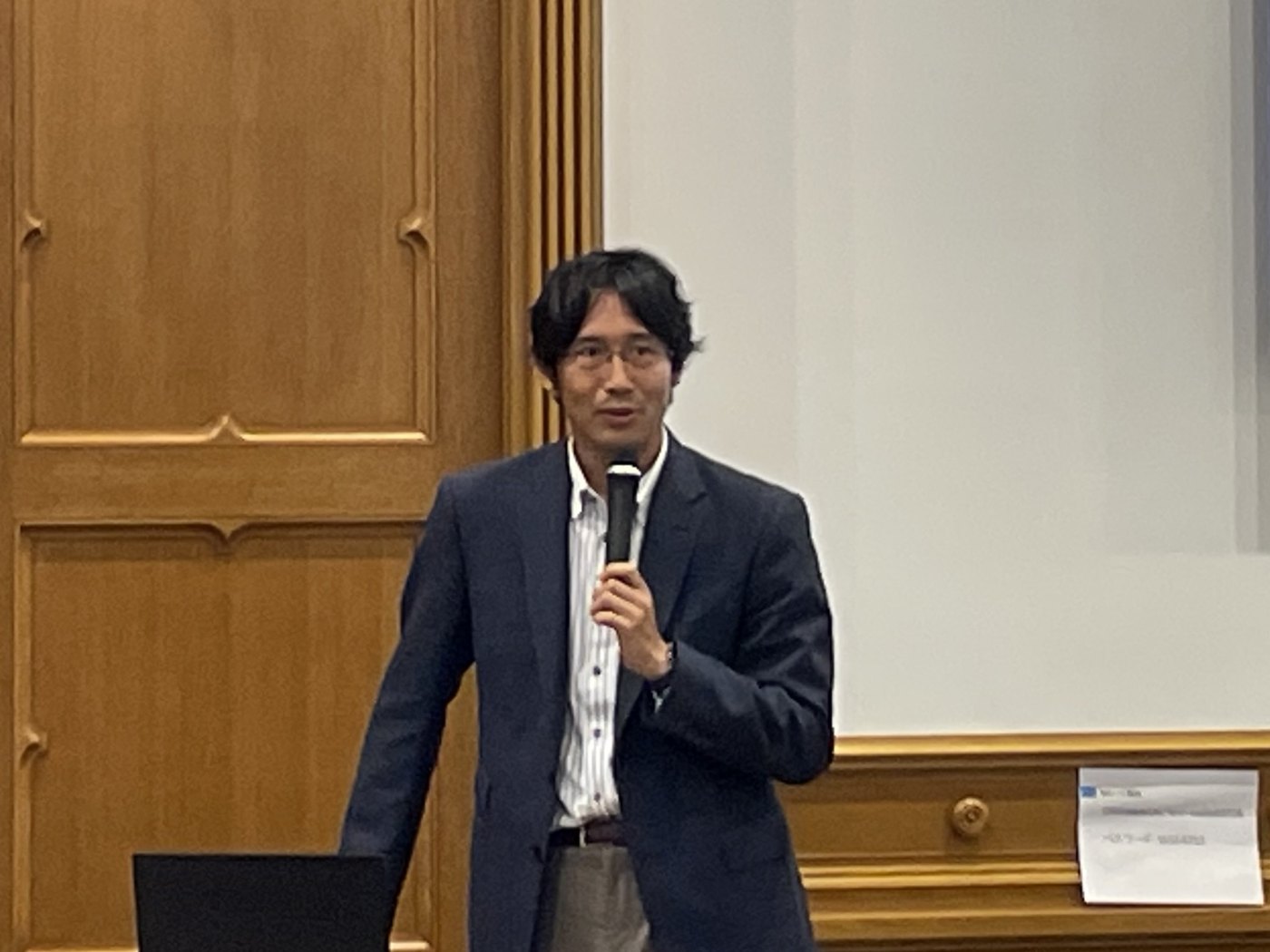
2026年7月28日(火)、慶應義塾大学 三田キャンパス 東館で開催された 「企業価値に資する人的資本経営コンソーシアム」2026年度 第2回研究会(主催:同コンソーシアム/慶應義塾大学SFC研究所)において、琴坂将広が プログラム③「経営戦略の進化 — アルゴリズムとロボティクスの時代に、CHROの役割はどう変わるか」 を担当しました。『経営戦略の進化〈理論編〉』および刊行予定の〈実践編〉の内容をもとに、AIとロボティクスが広がる環境で人事責任者(CHRO)が担う役割を論じ、参加企業との討議を行いました。
On 28 July 2026, at the second research session of the Human Capital Management Consortium for Corporate Value (hosted by the consortium and the Keio Research Institute at SFC), held in the East Building of Keio University's Mita Campus, Masahiro Kotosaka delivered Programme 3: "The evolution of strategic management — how the CHRO's role changes in an age of algorithms and robotics." Drawing on The Evolution of Strategic Management (Theory) and its forthcoming companion volume on practice, the session set out what the human-resources function is being asked to do as AI and robotics spread through the firm, and closed with a discussion among the participating companies.
経営戦略研究の4つの潮流 · Four currents in strategy research
講義の前半では、近年の経営戦略研究における4つの潮流を取り上げました。実践・行動としての経営戦略、多層的境界の戦略、非市場・制度戦略、アルゴリズムとロボティクスの4つです。扱う対象は異なりますが、いずれも最後は「人と組織をどう設計するか」という同じ問いに戻ってきます。経営戦略は市場の分析だけで完結するものではなく、意思決定の仕組み、制度の設計、人材のマネジメントまでを含めて考える領域になってきました。
The first half covered four currents in recent strategy research: strategy as practice and behaviour, strategy across multi-layered boundaries, non-market and institutional strategy, and algorithms and robotics. Their subjects differ, but each comes back to the same question: how organisations, and the people in them, should be designed. Strategy is no longer settled by market analysis alone; it now takes in decision-making structures, institutional design, and the management of people.
CHROに求められる3つの役割 · Three roles for the CHRO
この4つの潮流を人事の側から読み替えると、CHROに求められる役割は次の3つに整理できます。
Read from the human-resources side, those four currents translate into three roles for the CHRO.
- 判断構造の設計者 — 組織の判断に影響するバイアスや意思決定プロセスを設計する役割。会議体の設計、資料のフォーマット、評価の方法といった日々の実践を整えることが、意思決定の質を左右します。
- 人材境界の統治者 — 正社員だけでなく、委託先、パートナー企業、コミュニティまで含めて人的資本を捉える役割。組織の境界の外側にある人材をどう扱うかが、組織が実際に発揮できる能力を決めます。
- 労働市場・規範のルール形成者 — 人的資本開示、雇用規範、AI利用規範を、社会のルール形成に働きかける制度戦略として捉える役割。
Designer of the judgement structure — shaping the biases and decision processes that determine how the organisation reaches its judgements. Meeting formats, document templates, and evaluation methods are the everyday practices through which decision quality is set. Steward of human-capital boundaries — treating contractors, partner firms, and communities as part of the firm's human capital, not only its employees; how the firm works with people beyond its boundaries determines what it can actually do. Rule-setter in labour markets and norms — approaching human-capital disclosure, employment norms, and rules for AI use as institutional strategy aimed at shaping society's rules.
いずれも、人事部門が制度の運用にとどまらず、企業の競争優位を支える経営戦略そのものに関与することを意味します。
In each case the function moves beyond administering systems and into the strategy that underpins competitive advantage.
AIとロボティクスが変える人事の前提 · What AI and robotics change
後半では、AIとロボティクスの進展が人事の役割をどう変えるのかを論じました。AIは既存の業務を代替して効率を上げるだけでなく、「働き手は人間である」という人事の前提そのものを動かしています。これからの人事部門には、人とAIをどう配置し、それぞれの役割をどう設計するかという視点が求められます。あわせて、その配置のもとで妥当な判断が生まれる会議体と意思決定プロセスを設計することもCHROの仕事です。これは人事部門だけでは完結しないため、CTOやCFOをはじめ他部門と連携して、組織全体を設計・統治していく必要があります。
The second half turned to what the advance of AI and robotics does to the function. AI does not merely substitute for existing tasks and raise efficiency; it unsettles the assumption on which human resources has been built — that the worker is a person. The function therefore needs a view on how work is divided between people and AI, and how the role of each is designed. Designing the meeting structures and decision processes through which sound judgements emerge under that allocation is also the CHRO's work, and it cannot be done inside human resources alone: it requires working with the CTO, the CFO, and the heads of other functions to design and govern the organisation as a whole.
参加企業との討議 · Discussion with the member companies
講義後の討議では、参加企業からAI活用の現状と課題が共有されました。全社的な利用やAIエージェントの導入を進める段階にある企業が多い一方、人事領域では扱う情報の機密性と情報漏洩への懸念から、活用が限定的にとどまるという声が複数ありました。AIが一般的な知識を提供できるようになったからこそ、自社固有の文脈や知見の活用が差別化につながるという指摘もありました。また、判断をAIに委ねる傾向が強まることへの懸念が共有され、人間が担うべき判断とは何かが議論されました。AI時代の組織設計と人事の実践については、刊行予定の『経営戦略の進化〈実践編〉』でも取り上げます。
In the discussion that followed, the member companies described where they stand on AI. Many are rolling it out company-wide or introducing agents, while several noted that use within human resources remains limited, given the sensitivity of the data involved and concerns about leakage. One observation was that precisely because AI now supplies general knowledge, the firm's own context and accumulated judgement are what differentiate it. Concern was also raised about the drift toward delegating judgement to AI, and the conversation turned to which judgements should stay with people. Organisational design and human-resource practice under these conditions are among the subjects of the forthcoming practice volume of The Evolution of Strategic Management.
当日の3つのプログラムの詳細は、コンソーシアム公式サイトの開催記録に掲載されています。
コンソーシアムについて · About the consortium
企業価値に資する人的資本経営コンソーシアム は、慶應義塾大学SFC研究所に置かれた産学連携のプラットフォームです。人的資本経営の今日的な内容を認知化・言語化し、実務に使える形にすることを目的として、参加企業の経営層・人事部門とアナリスト、研究者が参加する研究会を定期的に開催しています。第3回研究会は2026年9月1日(火)に予定されており、「エビデンスで生産性を高めよう」と、コンソーシアムとして初のケーススタディ「人事戦略が描けるHRプロになりたい」の2テーマで実施されます。
The Human Capital Management Consortium for Corporate Value is an industry–academia platform based at the Keio Research Institute at SFC. Its aim is to articulate what human-capital management now consists of and to make it usable in practice; it convenes regular research sessions bringing together executives and HR leaders from member companies, analysts, and researchers. The third session is scheduled for 1 September 2026, covering evidence-based approaches to productivity and the consortium's first case study, on developing HR professionals who can design an HR strategy.