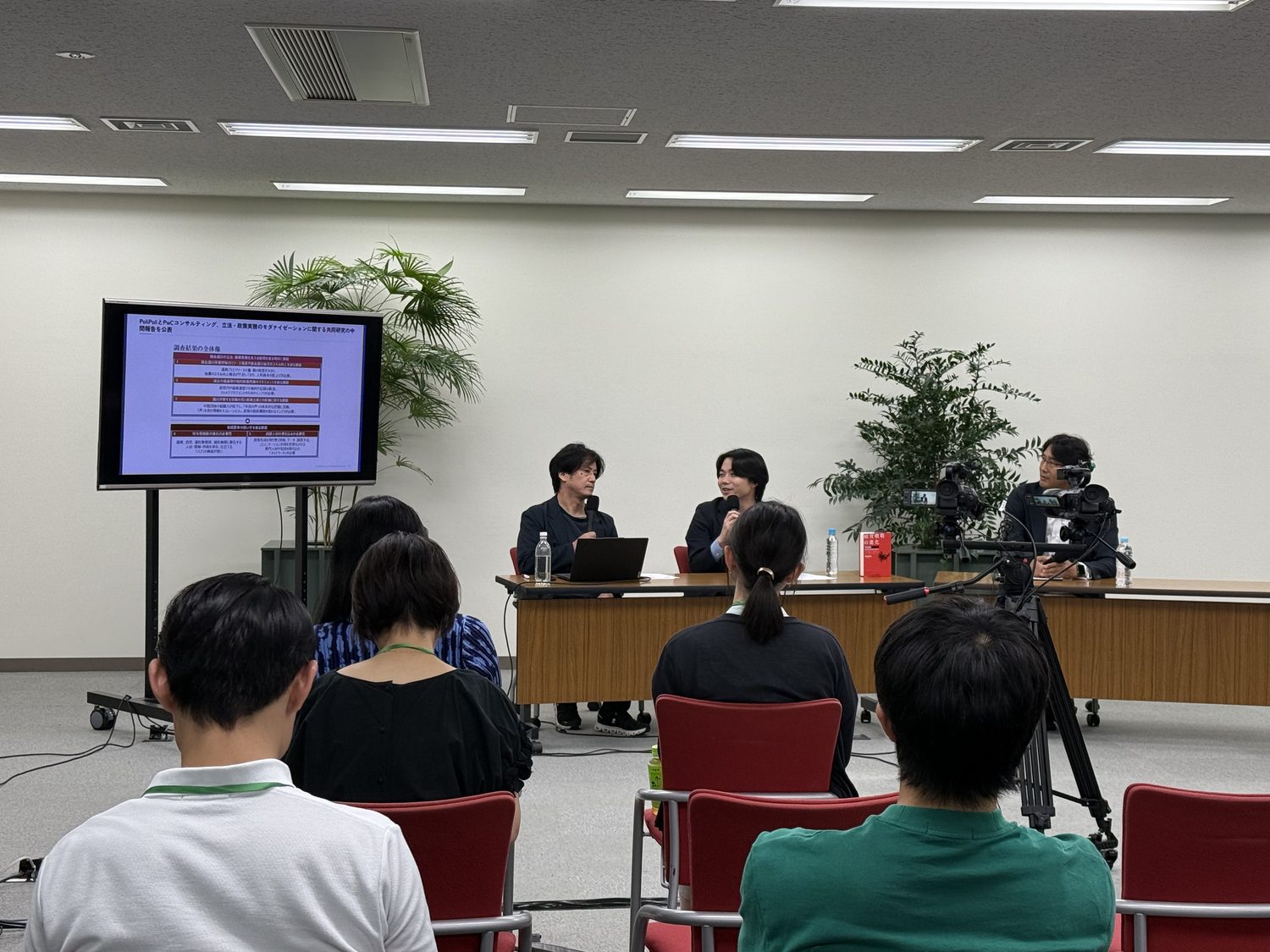
2026年7月15日(水)、株式会社PoliPoli 主催の特別対談 「いま企業に必要な『非市場・制度戦略』とは何か――政策動向が競争優位を生む経営の新潮流」 が、官民共創HUB(東京・虎ノ門)とオンライン配信のハイブリッドで開催されました。琴坂将広と、株式会社PoliPoli 代表取締役CEO の伊藤和真氏 が、規制・政策・標準といった「市場の外」をどう競争優位へと結びつけるかを、理論と実務の両面から語り合いました。会場の実務家に加え、オンラインでも100名ほどの皆さまにご参加いただきました。
On Wednesday 15 July 2026, PoliPoli Inc. hosted a special dialogue, "What 'non-market and institutional strategy' means for companies today — how policy trends become a source of competitive advantage," as a hybrid event at the Kanmin-Kyoso HUB in Toranomon, Tokyo, and online. Masahiro Kotosaka and Kazuma Ito, representative director and CEO of PoliPoli, discussed how the "world outside the market" — regulation, policy, and standards — can be turned into competitive advantage, drawing on both theory and practice, before an in-person audience of practitioners and around a hundred online participants.
この対談は、琴坂の新刊『経営戦略の進化〈理論編〉』(東洋経済新報社)を読んだ伊藤氏が、同書で非市場・制度戦略が新潮流の一つとして扱われている点に着目し、企画したものです。以下に、当日の議論から特に注目を集めた論点を紹介します。
The event grew out of Ito's reading of Kotosaka's new book, The Evolution of Strategic Management (Theory) (Toyo Keizai), which treats non-market and institutional strategy as one of the four new currents in the field. Below are some of the points that drew the most interest on the day.

① なぜ「市場の外」が経営を左右するのか · Why the world outside the market shapes management
まず琴坂が、非市場・制度戦略の学術的な背景を整理しました。先進国市場では競争環境は比較的安定したものと見なされてきましたが、新興国や移行経済に進出した企業は、ルールがない、あるいは自らルールを形づくれる状況に直面します。環境そのものを再定義した企業ほど高い成果を上げてきた、という知見がこの議論の出発点です。その後、Uber や Airbnb のようなプラットフォーム企業が、既存の規制が想定していなかった市場を技術で立ち上げたことで、議論はさらに前へ進みました。規制変更が損益に与える影響を管理会計で分析し、シナリオごとに事業計画を用意する企業もあれば、法令違反の制裁金をあらかじめ予算に織り込む企業さえある、と琴坂は紹介しました。市場を所与とせず「変えられるもの」として戦略を立てる企業が現に存在する、という指摘は会場の関心を集めました。
Kotosaka opened by setting out the academic background. In developed markets the competitive environment has been treated as relatively stable, but firms entering emerging or transition economies often find either no rules or rules they can help shape — and those that redefine the environment itself have tended to perform better. The debate moved on again when platform companies such as Uber and Airbnb used technology to open markets that existing regulation had not anticipated. Some firms, he noted, analyse the profit impact of regulatory change in their management accounts and prepare a business plan for each scenario; a few even budget in advance for non-compliance penalties. His observation that some companies treat the market not as a given but as something they can change drew clear interest from the audience.
これに対し伊藤氏は、政党・省庁・自治体とともに政策づくりを支援してきた PoliPoli の立場から応じました。いまや永田町の側でも政策リソースが不足しており、「お上が決めたルールに市場が合わせる」というかつての鉄のトライアングル型の構図は揺らいでいます。制度が複雑になる一方で立法・行政の人手は足りず、むしろ議員や省庁の側が現場の声を求めています。現場と政策のあいだにある「空白」をどう埋めるかが問われている、という認識が共有されました。
Ito responded by drawing on PoliPoli's experience of supporting policy-making with parties, ministries, and local governments. Policy resources are now in short supply on the political side too, and the old "iron triangle" — in which the market simply aligns with rules handed down from above — is loosening. As institutions grow more complex and the legislative and administrative sides remain short-staffed, legislators and ministries increasingly want to hear from the field. The question, both speakers agreed, is how to fill the gap that has opened up between the field and policy.
② 「非市場・制度戦略」をどう使うか · Institutional strategy in practice
二つ目のテーマは実践論です。琴坂は、出発点は企業の根源的価値観(コーポレートバリューズ)にあると強調しました。自社が何のために存在し、どんな社会や市場を望むのか。それと収益性が重なる点を見いだす必要がある、と語りました。あわせて、どんなに理不尽に見える規制にも制定当時には合意された理由があり、その理由が現在の環境でなぜギャップを生んでいるのかを理解することが、制度を動かす第一歩だと述べました。伊藤氏も、企業からの相談ではまず「何をしたいのか」を徹底して言語化してもらうこと、そして公益性がなければ政策側の相手は耳を貸さないことを、実務の勘所として挙げました。
The second theme was practical. Kotosaka stressed that the starting point is a firm's core values: what it exists for, and what kind of society and market it wants. The task is to find where those values overlap with profitability. However unreasonable a regulation may look, he added, there was an agreed reason for it when it was introduced; understanding why that reason no longer fits today's environment is the first step towards changing the institution. Ito agreed, adding two practical points: he first asks companies to articulate clearly what they actually want to achieve, and stresses that without a genuine public benefit, policymakers will not listen.
伊藤氏は、良い制度戦略の要点を「正しいアジェンダ・正しいロジック・正しいアプローチ」の三つに整理しました。ネット上での個人の物販で、特定商取引法上の住所公開が壁になっていた事例(クリエイターエコノミー協会などの取り組み)を引きながら、政府に「物申す」のではなく、関係者を幅広く巻き込んで一緒にルールをつくる協調的な姿勢が重要で、自分たちは意図的に「ロビイング」という言葉を使わない、と語りました。琴坂も、規制市場ではたとえ自社シェアが小さくても、規制が変われば市場全体が動くため、「自社のためだけ」を狙わないほうが結果的に自社にとっても最適になる、と応じました。
Ito distilled effective institutional strategy into three elements: the right agenda, the right logic, and the right approach. Citing the case of online sales by individuals — where a legal requirement to publish one's home address had become an obstacle (an issue taken up by bodies such as the Creator Economy Association) — he argued for a collaborative stance that builds rules together with a wide range of stakeholders, rather than "making demands" of government; his team deliberately avoids the word "lobbying." Kotosaka added that in regulated markets even a small player benefits when the whole market moves, so aiming for more than one's own narrow interest often turns out to be best for the firm as well.
制度を変える主体として、琴坂は「制度的起業家(institutional entrepreneur)」という概念を紹介しました。ここでの「制度」は、公式の法規制だけでなく、慣習・常識・ものの見方といった非公式なものまで含みます。会社・市場・産業・国家を同じ「フィールド」として捉えれば、企業変革と市場変革、そして制度変容を地続きの論理で論じられます。伝統的な戦略分析だけでは持続的な競争優位を生みにくくなったいま、市場構造そのものに働きかける取り組みは時間がかかるものの、だからこそ長く続く優位につながる、という見方が示されました。
As for who changes institutions, Kotosaka introduced the idea of the "institutional entrepreneur." "Institution" here means more than formal law and regulation; it includes the informal too — customs, common sense, and ways of seeing. If a company, a market, an industry, and a nation are all treated as "fields," then firm, market, and institutional change can be discussed with the same underlying logic. Now that conventional strategy analysis alone rarely yields a sustainable advantage, acting on the structure of the market itself offers a more durable one — slow as it is, and precisely because it is slow.

③ 「非市場・制度戦略」を経営の型(政策経営)にする · Making it a management discipline
三つ目のテーマは、非市場・制度戦略を一過性の対応で終わらせず、組織に根づいた能力に変えることです。琴坂は、制度戦略は投資から成果までに3〜5年を要するため、単年度のKPIや予算にはなじまないこと、そして渉外を法務や総務の下に埋もれさせるのではなく、CXO直轄で中期経営計画に直接つなぎ、長い時間軸でモニタリングすべきことを指摘しました。「これはコストセンターではなく、市場を形づくる新規事業に近い」という位置づけです。伊藤氏は、この機能を経営そのものとして扱う実践を、PoliPoli が掲げる 「政策経営」 という言葉とともに説明しました。ロビイングでも、政府渉外だけでもない、という意味合いです。琴坂は、経営戦略がもともと「ビジネスポリシー」と呼ばれ、自身の所属する総合政策学部が「ポリシーマネジメント」を掲げていることにも触れ、ここでいう「政策」は日常語の意味よりも広い概念だと補足しました。
The third theme was how to turn all this into a lasting organisational capability rather than a one-off response. Because institutional strategy typically takes three to five years to pay off, Kotosaka argued, it fits poorly with annual KPIs and budgets; public affairs should not be buried under the legal or general-affairs departments but should report directly to a CXO, be tied to the mid-term plan, and be monitored over a long horizon. "This is not a cost centre; it is closer to a new business that shapes markets." Ito described treating the function as management in its own right, using PoliPoli's term "policy management" — meaning neither lobbying nor government affairs alone. Kotosaka noted that strategy was once called "business policy," and that his own faculty is the Faculty of Policy Management, so the word "policy" here is broader than its everyday sense.
後半では、こうした流れをAIが加速させるという見方も語られました。AI エージェントが意思決定を担う時代には、かつての検索エンジン最適化(SEO)に代わり、自社にとっての「あるべき姿」を示すポジションペーパーを数多く用意しておくことが競争条件になる。琴坂はそう述べ、影響力のある企業ほど自社の世界観を積極的に発信してほしいと呼びかけました。伊藤氏は、消費者の側でも政府の側でもAI化が進み、リアルタイムでアジャイルな政策立案も可能になりつつあると述べ、その前提として、日本の立法・行政の人手不足を、企業や個人を含む多様な担い手が補っていく必要があると応じました。
In the second half, both speakers expected AI to reinforce the shift. In an era where AI agents, rather than search engines, increasingly shape decisions, keeping a stock of "position papers" that set out a firm's view of the ideal state becomes a basic condition of competing; Kotosaka urged influential companies to communicate their worldview actively. Ito agreed that consumers and government alike are becoming "AI-enabled," making real-time, agile policy-making plausible — though this presupposes, he argued, that a diverse set of actors, companies and individuals included, helps to make up for the shortage of hands in Japan's legislature and administration.

会場との質疑から · From the Q&A
質疑では、実務に即した率直な論点が出ました。会場からは、新しい事業の社会実装では「政治や行政より、最後に壁になったのは社内だった」という実務家の声があり、社内の合意形成をどう進めるかが問われました。伊藤氏は、書籍や業界・経済団体の発信といった外部からの適度なプレッシャーを活かすこと、そして「3年後にこの事業がこう育つ」という時間軸のストーリーを営業など他部門とも共有し、部門ごとのインセンティブ設計を調整することを助言しました。琴坂は、日本特有の事情をグローバル本社に理解してもらうまでに時間がかかる構造にも触れました。オンラインからは経済団体の役割についての質問もあり、琴坂は、団体が一枚岩で「一点突破」を図るより、加盟する経営者が同じ問題意識のもと、それぞれの専門領域から発言する「群」としてのあり方が現代的ではないか、と応じました。
The Q&A brought up some candid, on-the-ground issues. One practitioner observed that in getting a new business adopted in the real world, "the final barrier was not politics or administration but internal alignment," and asked how to build internal consensus. Ito suggested making use of moderate external pressure — from books and from industry associations and business federations — and sharing a story with a clear timeline ("in three years, the business will have grown to this point") with other departments such as sales, while adjusting each department's incentives. Kotosaka pointed to the structural lag in getting a global head office to understand Japan-specific circumstances. An online question about the role of business federations prompted Kotosaka to suggest that, rather than a federation acting as a monolith to force a single breakthrough, a more contemporary model may be for member executives who share the same concerns to speak from their own fields of expertise, as a loose collective.
ご参加いただいた皆さま、主催・運営いただいた株式会社PoliPoli の皆さまに、あらためて御礼申し上げます。
Our thanks to everyone who took part, and to PoliPoli Inc. for hosting and running the event.
政策を経営資源として捉える「政策経営」の取り組みについては、株式会社PoliPoli のウェブサイトをご覧ください。The book develops the theory; PoliPoli puts "policy management" into practice.