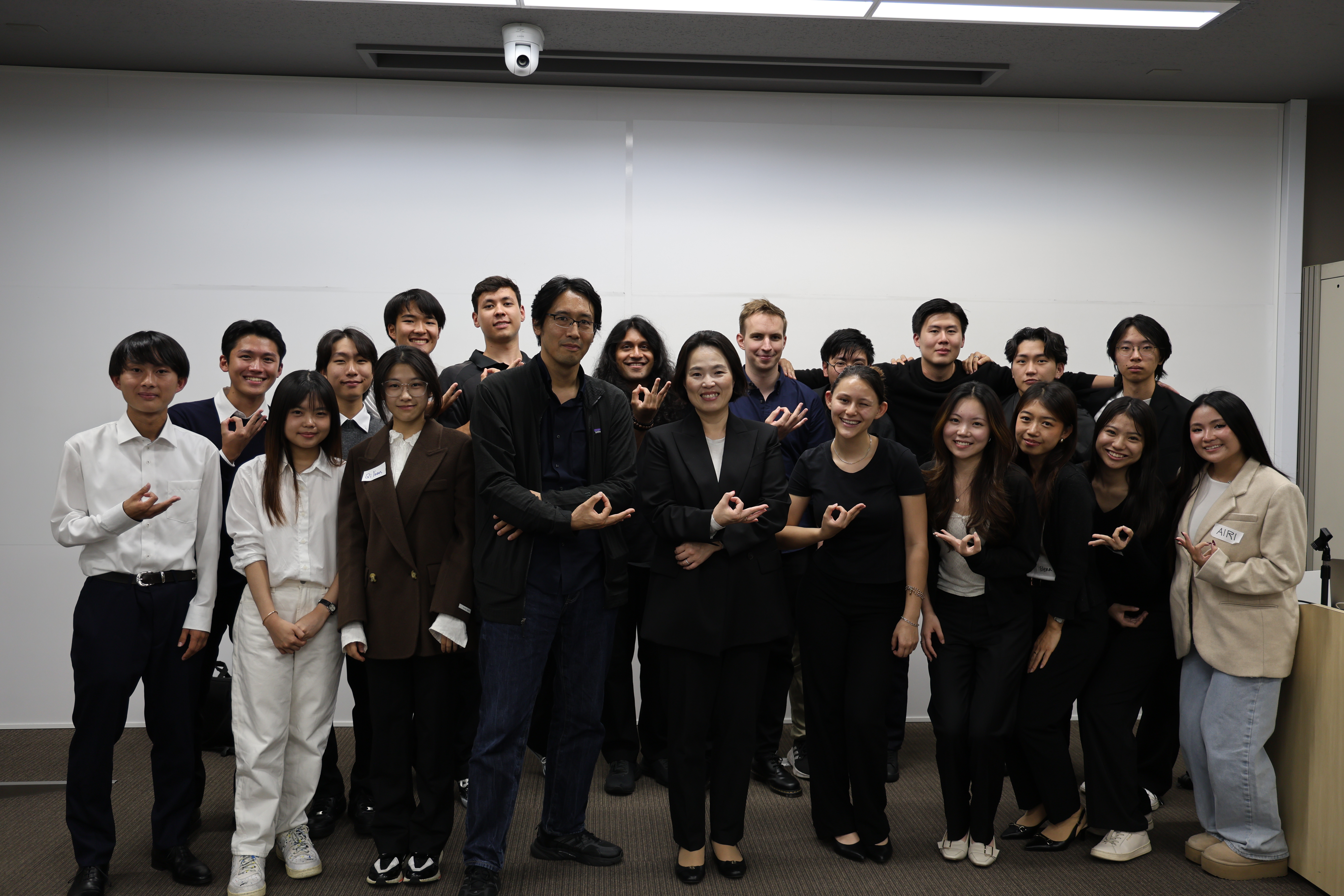
On 20 October 2025, the IBER-Kotosaka B2 (English-track) seminar held a guest session with CJ Group, the Korean multinational conglomerate. Our guest was the executive leading CJ Group's expansion across Oceania — Australia, New Zealand and the wider region. Over the weeks beforehand, students had worked through CJ Group's management and strategic direction under the seminar's standard preparation cycle, producing their own proposals. On the day itself, though, the discussion differed from our usual joint sessions: rather than focusing on whether the strategic proposals themselves were well-framed, we spent most of our time on what actually happens to a proposal on its way to becoming something real.
2025年10月20日、IBER-琴坂研究会 B2(英語ゼミ)は、韓国を代表する大手コングロマリットであるCJグループとの合同セッションを開催しました。ご登壇いただいたのは、CJグループのオセアニア全域(豪州・ニュージーランド他)での事業展開を指揮されている経営幹部の方です。セッションに先立つ数週間、学生はB2本来の準備サイクルに沿って、CJグループの経営とその方向性について議論を重ね、自分たちの独自提案をまとめてきました。ただ当日の議論は、これまでの多くの合同セッションとは少し違う方向へと向かいました。戦略提案そのものの枠組みの良し悪しに時間を費やすのではなく、その大半を、「提案が『実際のもの』になっていく過程で、現場で何が起きるのか」という問いに割くことになったのです。
Beyond strategy: the execution lens 戦略の先へ:実行の視座へ
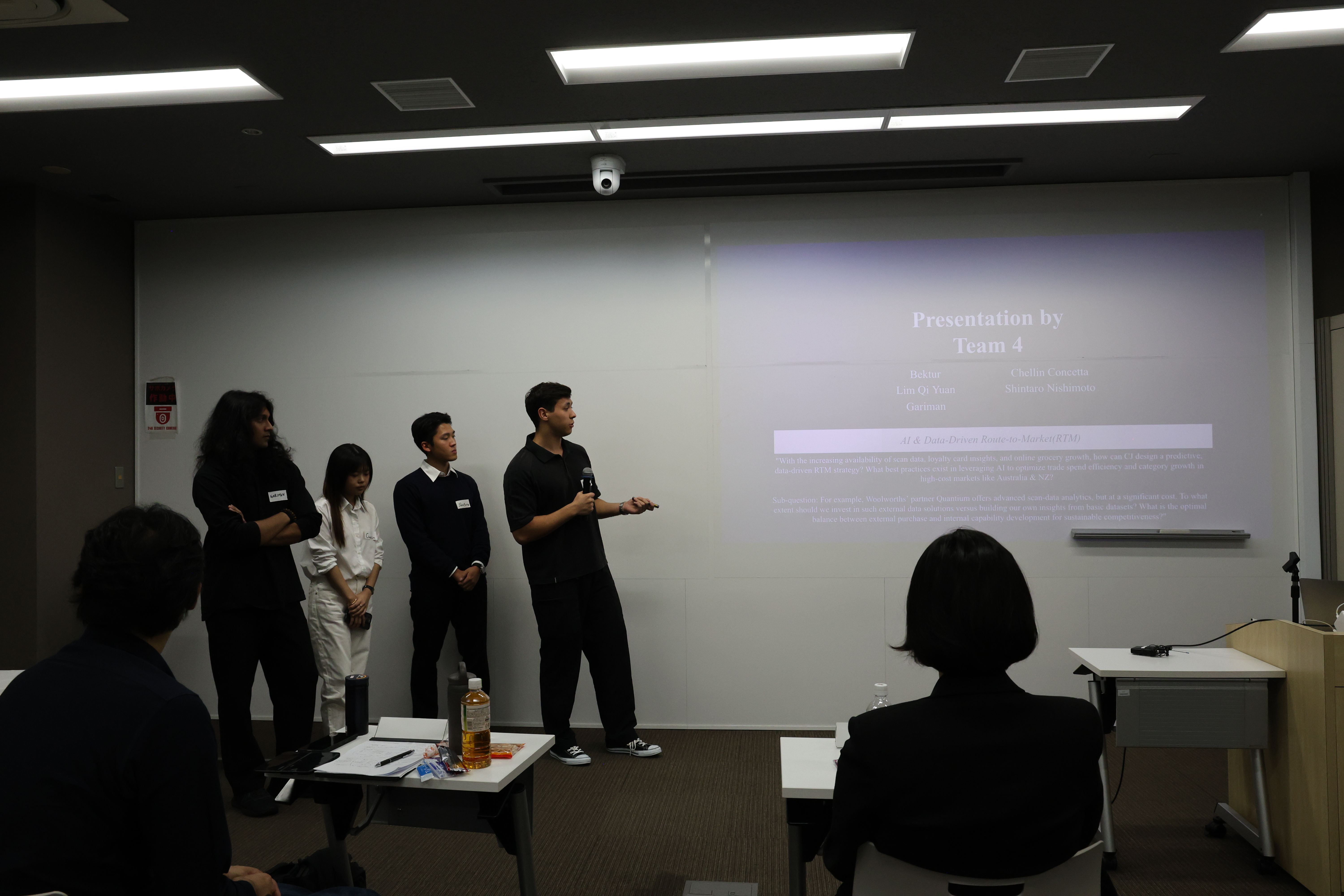
B2 joint sessions are typically about testing a strategic argument in front of someone senior enough to argue back — and that half of the day did take place, with teams presenting and the executive engaging. But the main focus of the discussion was elsewhere. Because our guest was running Oceania on the ground, the discussion turned naturally toward execution: where the real bottlenecks sit when a proposal moves from the slide deck into procurement, distribution, local partner negotiations, regulatory contours, internal politics, and the everyday organisational choices that decide whether anything moves at all.
B2の合同セッションは、通常、ある戦略的な主張を、反論できるだけの立場にある方に向かってぶつけ、試していただく場です。今回もその半分は行われました。各チームが発表し、経営幹部の方がそれに向き合う、という場面です。ただ、この日の議論の中心はそこにはありませんでした。ご登壇者が実際に現地でオセアニア事業を動かされている立場だったため、議論は自然と実行面へと向かっていきました。提案がスライドデッキの外に出て、調達、流通、現地パートナーとの折衝、規制環境、社内政治、そして「そもそも物事が動くかどうかを決めている日々の組織的な選択」と出会うとき、現場では何が詰まるのか。議論の中心はそこにありました。
What students took away 学生にとっての学び
The most valuable thread of the day was also the hardest to capture on a slide: a detailed perspective on the gap between proposal and execution. Where the friction sits; what a proposal has to carry with it — in argument, in sequencing, in stakeholder management — to survive that friction; and what changes between "this is a good idea" and "this now runs." That kind of perspective is hard to acquire from case analysis or from a single presentation; it requires an interlocutor who has done the work in practice. That the conversation could go in this direction at all is part of why we run B2 joint sessions the way we do. The goal is not the pitch itself but the value of being challenged by a practitioner.
この日もっとも価値のあった筋は、同時にもっともスライドに載せにくい種類のものでした。すなわち、提案と実行のあいだに横たわる距離についての、具体的な視座です。どこに摩擦が潜むのか。その摩擦を越えるために、提案は論理・実行順序・関係者マネジメントにおいて何を携えていなければならないのか。そして、「これは良い案だ」という段階と「これは実際に動いている」という段階のあいだで、何がどう変わるのか。こうした視座は、ケース分析や一度きりのプレゼンテーションからはなかなか得られません。実際にその事業を現場で動かしてこられた方からの応答があって、はじめて手に入るものです。議論をこうした方向に持っていけること自体が、B2の合同セッションを今の形で運営している理由の一つです。目的はプレゼンテーションそのものではなく、実務家の方からの反論に晒されることで、学生の側に何が残るか、にあります。
About CJ Group CJグループについて
CJ Group is one of South Korea's major conglomerates, headquartered in Seoul. Originally established in 1953 as the food arm of Samsung and spun out as an independent group in 1993, CJ today spans food and food services (including the Bibigo brand), entertainment and media (CJ ENM), logistics (CJ Logistics), and biotechnology. CJ Foods' international expansion — including into Oceania — has been a notable part of Korean food companies' global growth over the past decade. That made it a well-suited case for a B2 seminar thinking about international business strategy, and — as the day ended up going — about how a global strategy actually grounds itself in a specific market.
CJグループは、ソウルに本社を置く、韓国を代表する大手コングロマリットです。1953年にサムスングループの食品事業として発足し、1993年に独立したグループとして分離しました。現在では食品・外食事業(Bibigoを含む)、エンターテインメント・メディア(CJ ENM)、物流(CJ Logistics)、バイオテクノロジーなど、多岐にわたる事業を展開しています。CJ Foodsの国際展開、とりわけオセアニアを含む海外への進出は、この10年の韓国食品のグローバル展開を代表する動きのひとつで、国際経営戦略を学ぶB2ゼミにとって適切な題材でした。そして、当日の議論が向かった先を踏まえれば、グローバル戦略が具体的な市場のなかでどのように根づいていくのか、という問いに向き合う相手としても、CJグループは理想的なパートナーだったと言えます。