2024年8月2日(金)から4日(日)にかけて、琴坂研究会の夏合宿を 沖縄 で開催しました。今回はビーチに面した 海の家を一棟貸し切り、ゼミ生同士で共同生活をしながら過ごす形式を選びました。日中は海とマリンスポーツで沖縄の自然に身を浸し、夜は先生も交えて、卒業生による 卒論発表 と、それぞれの これまでのゼミ活動・これからのキャリア についての議論を、ゼミ生全員でじっくりと重ねる3日間となりました。
From Friday 2 August to Sunday 4 August 2024, the IBER-Kotosaka summer seminar retreat was held in Okinawa. This year, the seminar rented a beach house in its entirety and lived together for three days. Days were spent in the sea and on water — swimming, marine sports, the Okinawan summer at full strength. Evenings reconvened around the long table, with Kotosaka joining: graduating seniors presented their undergraduate theses, and the whole seminar talked through what the seminar had meant so far and where each member was heading next.
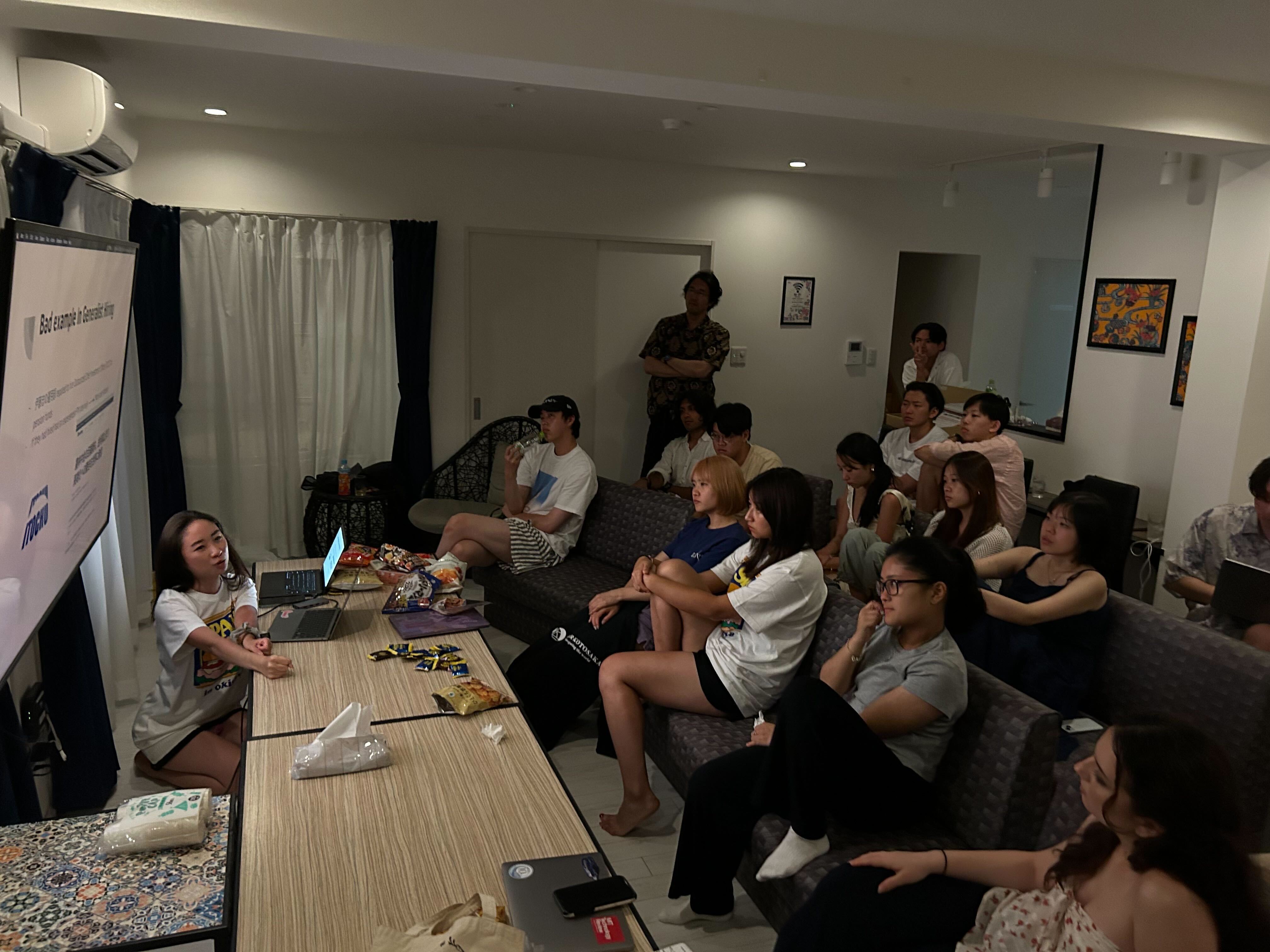
沖縄という場所、共同生活という形式 · Okinawa, and the choice of "shared living"
沖縄を選んだ理由は、シンプルに二つあります。一つは、東京とは時間の流れ方が明確に違う場所であること。もう一つは、海と空の規模が、ゼミ生の頭の中で動いている図式をいったん相対化してくれること。沖縄に着いた瞬間に、議論のテンポが少しだけ落ちるのが分かります。落ちたまま、そこで考え直したい話題を持ち込めるのが、合宿の合宿らしいところです。
Two reasons for Okinawa, really. First, the rhythm of the day feels visibly different from Tokyo's. Second, the scale of the sea and sky has a way of putting whichever mental diagram a student has been chasing all month gently back into perspective. The moment we arrived, the tempo of the conversations dropped a notch — and the camp's job is to use exactly that drop, on whichever topics are worth re-thinking from a slower base.
形式として今回特に意識したのが、海の家を一棟貸し切っての共同生活 です。ホテル滞在型の合宿と違い、朝食の準備や夜の片づけまでを誰かが当番として担うことで、研究の議論とは別の場面で「一緒に動く」時間が自然に生まれます。研究会としては、議論の質と同じくらい、メンバー同士の距離感そのものを設計したい、という意図がありました。沖縄の3日間は、その意味でも狙い通りの設計になりました。
The choice we leaned on most this year was renting a beach house outright and living in it together. Unlike a hotel-based camp, somebody is always on breakfast prep, somebody else on the evening cleanup. Time spent moving together — outside the formal seminar — accrues naturally. As a seminar, we care about the quality of discussion, but we also want to design the distance between members. Okinawa, this year, did both.
海と、マリンスポーツと、夜の長いテーブル · Sea, marine sports, and the long evening table
日中は海でした。ビーチに直接出られる立地を活かし、シュノーケリングやマリンスポーツに皆で出ていきました。沖縄の海は、文字通り視界の色が違います。普段の研究会では絶対に作れない種類の 非言語の共有体験 が、午前中のうちに出来上がる。これが、夜の議論の入りをかなり変えます。お互いの普段の文脈をいったん脇に置いた状態で席に着けるので、議論の最初の数分の手探りが、ぐっと短くなるのです。
Days were spent in the sea. The beach house opened straight onto the water, so snorkeling and marine sports happened almost as a default. The colour of the Okinawan sea is, frankly, not the colour of any sea our weekly seminar can produce. A whole morning of shared non-verbal experience stacks up before lunch — and that visibly changes how the evening discussions begin. Everyone sits down with their usual context already half-set-aside, and the awkward first few minutes of any group conversation simply contract.
夜の長いテーブルでは、卒業生による 卒論発表 から始まりました。研究テーマ、調べ方、得られた示唆。発表者本人にとっては「研究会で何を学び、何を残せたか」を改めて整理する時間でもあり、聞いている現役メンバーにとっては「自分の卒論はどこに着地させたいか」をひとり静かに考え直すきっかけにもなりました。ゼミでは、卒業の瞬間ではなく、卒業に向けて積み上げられたプロセスのほうが、後輩への一番の引き継ぎになる。沖縄の夜は、そのことを毎晩、目の前で見せてくれる時間でした。
The long evening table opened with the graduating seniors' thesis presentations: the question, the approach, the findings. For the presenters, it was a moment to retrace what they had learned in the seminar and what they were leaving behind. For the current members listening, it was a quiet prompt to ask themselves where they wanted their own theses to land. In a seminar, the handover to junior cohorts isn't really the moment of graduation; it's the visible accumulation behind it. Evening after evening in Okinawa, that lesson was on the table in plain view.
キャリアの話、これからの話 · Careers, and what comes next
卒論発表の後には、自然と「これからのキャリア」の話になりました。卒業後にどんな業界・どんな役割を選ぶのか、なぜ選ぶのか、その選択は学部の最初に思い描いていたものとどう違うのか。先生も交えながら、各自が言葉にしていきました。卒業生の話を、現役のB1・B2が同じ部屋で聞ける、という構造はゼミならではのもので、合宿はその構造をもっとも素直に活かせる場でした。
The thesis presentations slid naturally into the career conversation. What industry, what role, why now, and how that choice differs from the one each member had imagined entering the lab. With Kotosaka in the room, every seat got to articulate its own version. The structural advantage of a seminar — that current B1 and B2 students sit in the same room as graduating seniors talking honestly about their next steps — is one the camp lets us use without straining for it.
3日目の朝、海の家を片付けながら交わされる会話には、合宿初日にはなかった種類の親密さがありました。一緒に料理をした、同じ波で泳いだ、同じ卒論発表を聞いた。そうした共通体験が、研究会のあと半年の議論の手触りを少しずつ変えていきます。沖縄の3日間は、研究会の年間運営の中でも、「春学期にできた距離を、秋学期に持ち越す」 ための重要な接続点となりました。
On the last morning, packing up the beach house, the conversations carried a closeness that hadn't been there on day one. Cooking together, swimming the same wave, sitting through the same thesis defence. Shared experience of that texture changes the feel of the seminar's discussions for the half-year that follows. In the seminar's annual cycle, the three days in Okinawa worked as the joint that "carried the closeness built in the spring term into the autumn term."