On 12 December 2023, the IBER-Kotosaka B2 (English-track) seminar held a joint session with Rakuten Group. Our guest that day was a Rakuten executive who is also an alumnus of Keio SFC — a particularly meaningful combination for a seminar taught on the SFC campus. Over the preceding weeks, students had built their own proposals on Rakuten's future businesses following the seminar's standard preparation cycle, and the day itself took on an unusual character: students making the case for what Rakuten could be, and an executive who had himself, years earlier, sat in an SFC classroom responding with Rakuten's own current thinking.
2023年12月12日、IBER-琴坂研究会 B2(英語ゼミ)は、楽天グループとの合同セッションを開催しました。ご登壇いただいたのは、慶應義塾大学SFCの卒業生でもあり、楽天の経営幹部を務められている方です。SFCキャンパスで開講されているゼミにとって、この組み合わせは特別な意味を持ちました。学生は数週間にわたりB2本来の準備サイクルを踏みながら、楽天の将来事業に関する独自の提案を組み立てており、当日は、学生が「楽天はこれからどうあるべきか」を提示する側、先方がかつてSFCの教室で学ばれた卒業生として現在の楽天の考えで応答する側となる、独特の対話の場となりました。
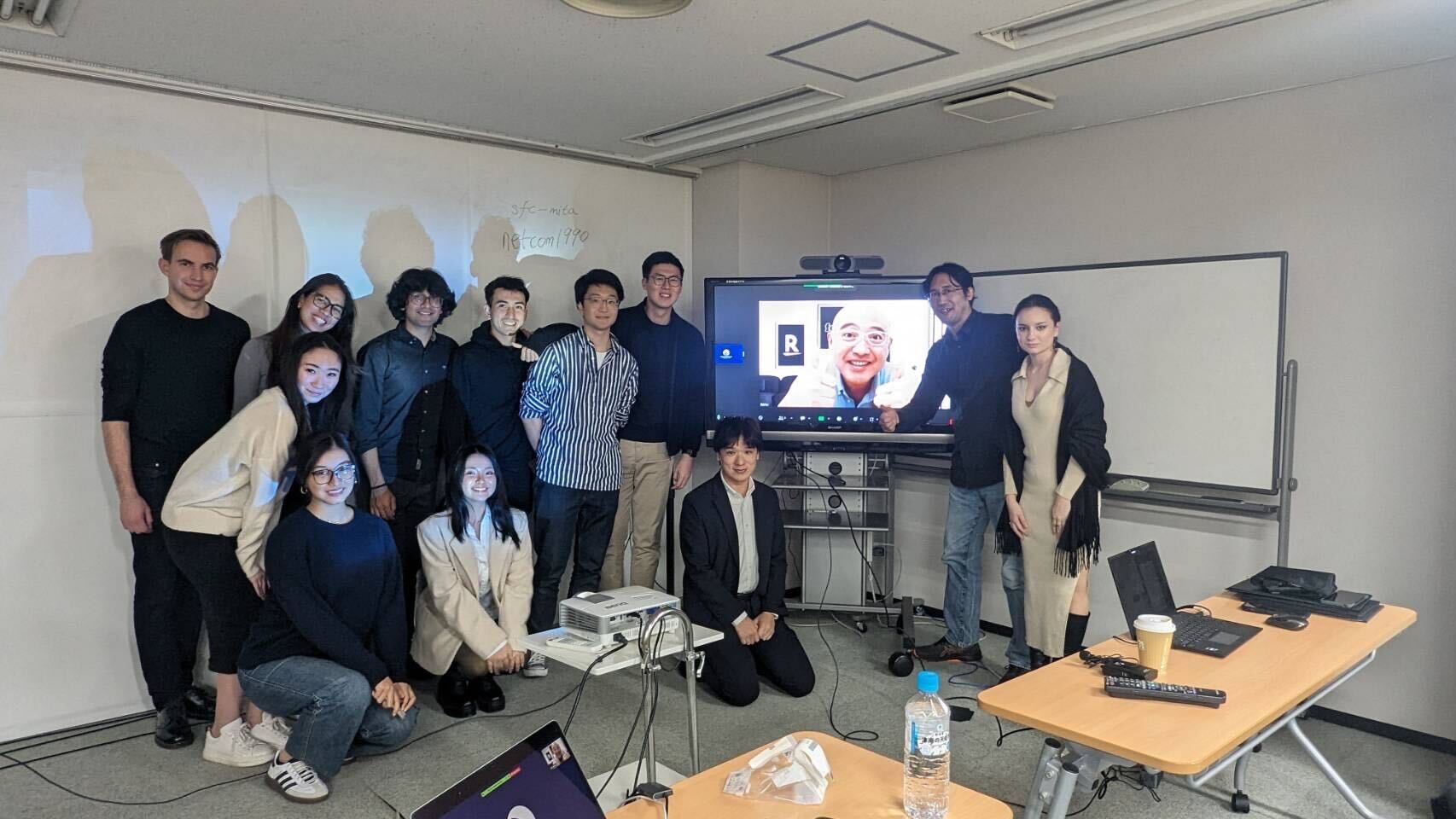
Seminar meets alumnus ゼミと卒業生の再会
B2 joint sessions follow a consistent rhythm. The partner company brings the seminar a real brief; students spend two to three weeks analysing it on their own; a seminar-internal interim presentation sharpens the work through faculty and peer critique; and the day itself is a two-way debate between teams and the executive who owns the question. That familiar rhythm was in place here. What gave this particular session its character was who was on the other side of the table. Because the executive had come through SFC, the feedback had an extra dimension. It was strategic — pointing to where Rakuten is thinking today, and which of the student angles the company should take seriously — but it was also informed by a sense of what SFC had asked of him years earlier, and what the students now facing him might ask of themselves.
B2の合同セッションでは、いつも一定のリズムで準備が進みます。連携先の企業から実在の課題を提示いただき、学生は2〜3週間ほど独自に分析を進める。ゼミ内の中間発表で、教員やほかのゼミ生から徹底的な指摘を受けて提案を磨き上げる。そして当日、その問いを抱える経営幹部の方と双方向の議論を重ねる。今回もこのリズムは守られました。このセッションに独特の空気を与えたのは、やはり相手方の顔ぶれです。ご登壇者がSFC出身の先輩でもあったため、コメントにはもう一段深い含意がありました。「楽天が現在どう考えているか」「学生提案のどこを参考にすべきか」という戦略的な指摘はもちろんありますが、その奥には、「当時のSFCが自分に何を要求したか」「いま目の前の学生たちは、自らに何を問うべきか」という、先輩から後輩への問いかけがにじんでいました。
How the session ran 当日の展開
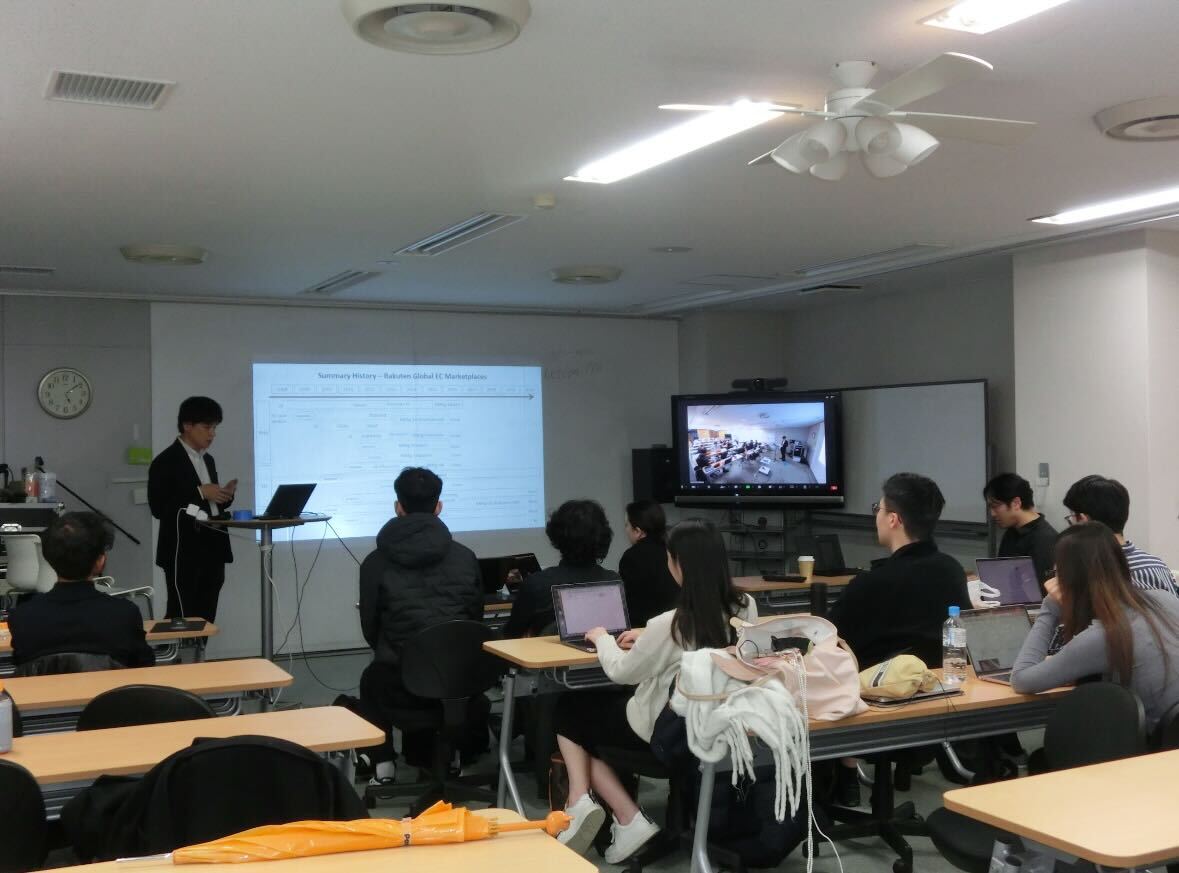
Each team presented in turn. The executive engaged each proposal at length, pointing out where the analysis had identified a point Rakuten itself had been considering internally, and also where the students had miscalibrated the market or underestimated internal constraints. Between presentations, the conversation moved easily into adjacent territory: what platform economics look like from inside a company that is actually operating one, how Japan-specific realities pull against naive internationalisation playbooks, and what it actually takes to stand up a new business inside a large organisation. Much of this sat outside the original brief, but it was valuable for the students.
各チームが順に発表しました。経営幹部の方はどの提案にも丁寧に向き合ってくださり、「この分析は、楽天自身がすでに内部で考えている論点をとらえている」と評してくださる場面もあれば、市場の読み違いや社内制約の過小評価といった弱点を具体的に指摘してくださる場面もありました。発表と発表のあいだには、議論は自然と隣接するテーマにまで広がっていきました。プラットフォーム経済を、実際にそれを運営する企業の内側から見るとどう見えるのか。日本特有の事情が素朴な国際化プレイブックをどう引き戻すのか。大企業の内側で新規事業を立ち上げるとは、具体的にはどういうことなのか。いずれも当初の課題からは外れた話でしたが、学生にとっては有益な議論でした。
About Rakuten 楽天について
Rakuten Group, Inc. is one of Japan's largest internet services companies, founded in 1997 and headquartered in Setagaya, Tokyo. What started as an online marketplace has grown into a portfolio spanning e-commerce, fintech, mobile telecoms, digital content and sports, with more than seventy services operating worldwide. For a seminar that studies strategic management, Rakuten is a natural counterpart — a company that has continuously rebuilt and expanded its portfolio in step with platform economics, Japanese market realities, and the demands of international expansion.
楽天グループ株式会社は1997年創業、東京都世田谷区に本社を置く、日本を代表するインターネットサービス企業です。オンラインマーケットプレイスから始まり、現在ではEC、フィンテック、モバイル通信、デジタルコンテンツ、スポーツへと事業領域が広がり、70を超えるサービスを世界で展開しています。プラットフォームの経済性、日本市場の現実、そしてグローバル展開の要求に応答しながら、ポートフォリオを継続的に再構築してきた企業として、楽天は戦略経営論を学ぶゼミにとって格好の対話相手です。