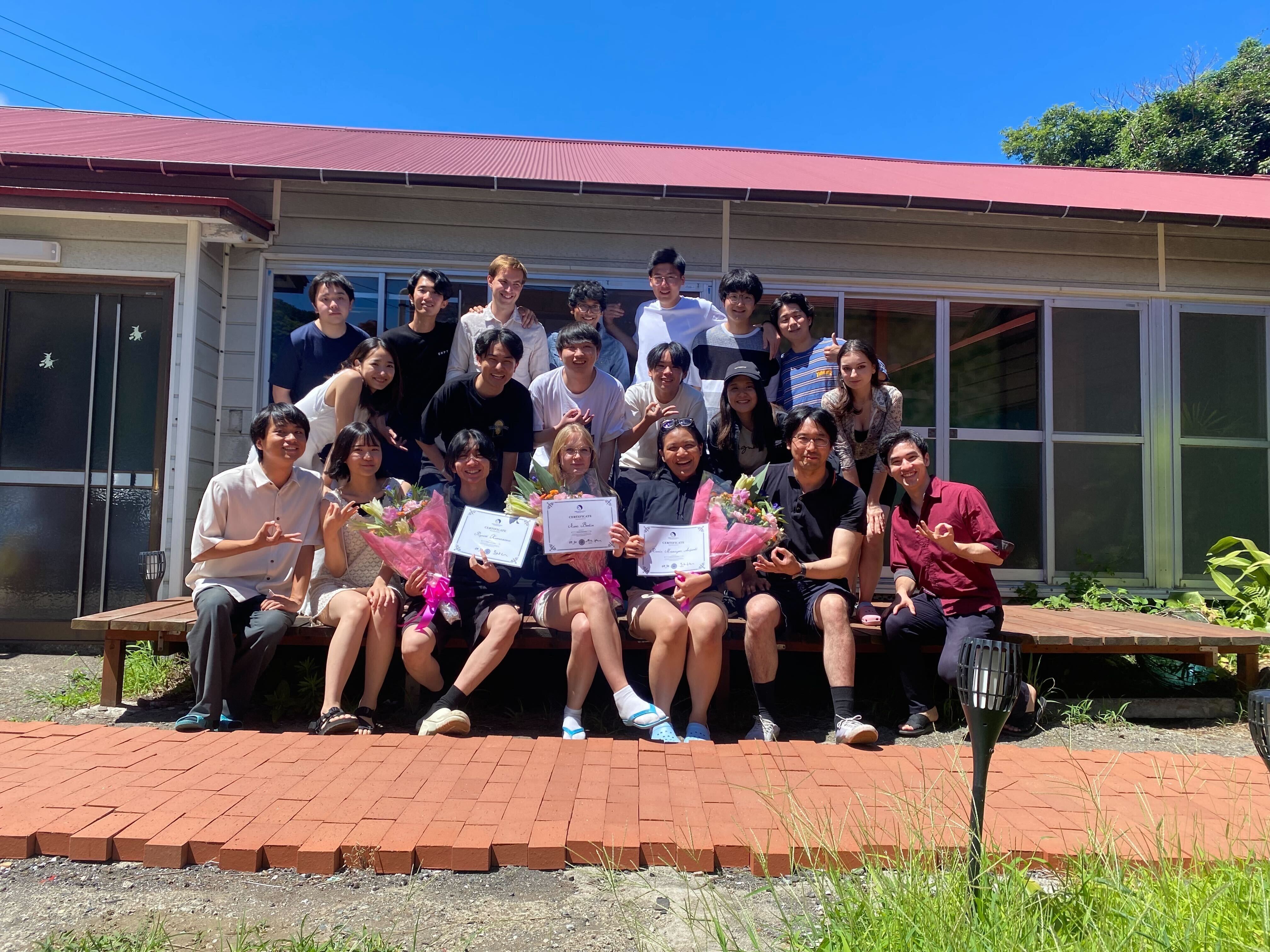
2023年7月29日(土)から31日(月)にかけて、琴坂研究会の夏合宿を 伊豆大島 で開催しました。B1(2年次)・B2(3年次)の現役メンバーに加え、卒業生3名もコテージに合流し、海と街と書斎が地続きにつながったような3日間となりました。日中は海と島内をめぐり、夜は『経営戦略原論』の章立て案や各チームが温めている会社のピッチ案について、長い議論を重ねました。最終日には、B2の旧ゼミ長2名が琴坂から 卒業証書 を受け取り、研究会としての節目もまた一つ、刻まれました。
From Saturday 29 July to Monday 31 July 2023, the IBER-Kotosaka summer seminar retreat was held on Izu-Ōshima. The B1 (second-year) and B2 (third-year) cohorts gathered at a cottage on the island, joined by three alumni, for three days that ran on a single rhythm of sea, town and seminar room. During the day the camp moved across the island; in the evenings, the conversation turned to the manuscript draft of "Foundations of Strategic Management" and to each team's ongoing company pitch. On the final day, two outgoing B2 seminar leads received their graduation certificates from Kotosaka, marking another quiet milestone for the seminar.
大島という選択 · Why Ōshima
東京湾を出て、ジェット船でおよそ100分。伊豆大島は「東京から最も近い、しかし確実に遠い島」です。日帰り圏ぎりぎりの距離感と、噴火の歴史を抱えた火山島の景観、そして島ならではの時間の流れ方。合宿を 「都市から半歩だけ離れた場所」 で行いたいと考えたとき、ここはちょうどよい目的地でした。日常からは確かに遠ざかるけれど、議論の密度は決して落とさない。そんな場所として、コテージを丸ごと借りての3日間が始まりました。
The jetfoil reaches Izu-Ōshima from Tokyo Bay in about 100 minutes — the island is "the closest island to Tokyo that still feels properly far." A volcanic landscape, the slower local pace, and a distance just outside the comfortable day-trip zone. We had wanted to hold the camp "half a step away from the city," and Ōshima fit. Far enough to leave routine behind, close enough that the discussions need not loosen. We rented an entire cottage and began three days that were built around exactly that balance.
海と、コテージと、章立て案 · The sea, the cottage, and the manuscript outline
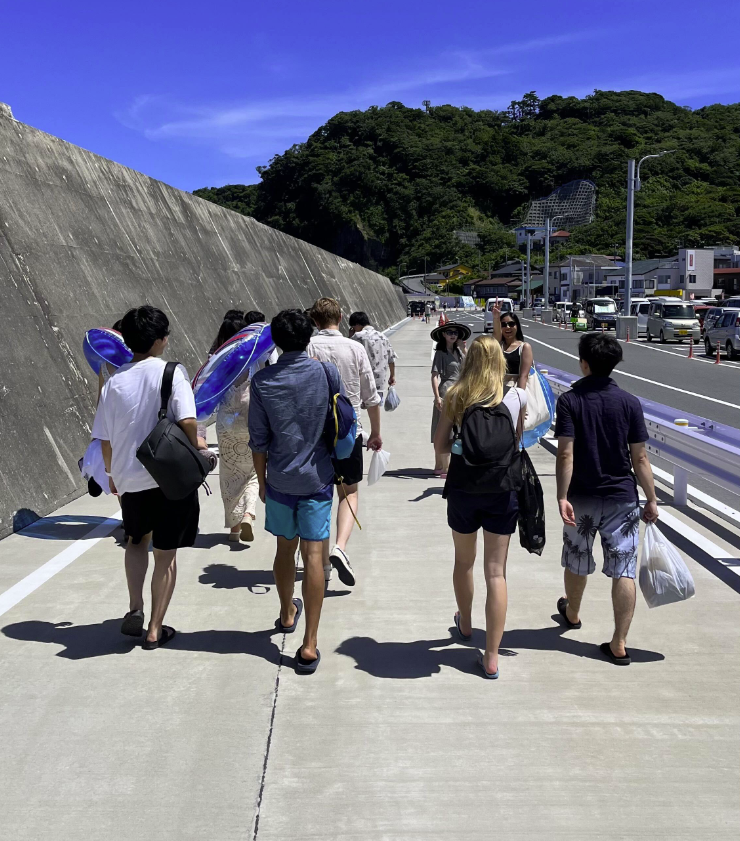
日中の数時間は、海でした。砂浜と岩場、温泉、そして島の道。研究会のメンバーが「同じ風景を、同じ角度で、何時間も並んで見ている」状態は、ふだんのキャンパスでは意外に少ないものです。合宿では、その時間が確保されます。会話のなかに研究や進路の話が混ざり、混ざったまま夕方を迎える。それが合宿の、ふだん意識しないけれど大事な側面でした。
For a few hours each day, the seminar was at the sea — beach, rocks, hot springs, and the island roads. There is something the seminar rarely gets back at the campus: hours of standing side by side and looking at the same view from the same angle. The camp protects that time. Talk slips between research, careers and side topics, and stays mixed all the way into the evening. It is the part of camp life that everyone notices afterwards, not during.
夜になると、コテージの居間が研究会の場になりました。中心のテーブルの上には、当時刊行準備が進んでいた琴坂の単著『経営戦略原論』の章立て案。研究会としての知的な土台でもある書籍について、章ごとの構成、章間のつながり、そして「これは入れるべきか、外すべきか」を、B1・B2と卒業生が混ざりながら議論しました。学生からの率直な疑問が、章立てそのものを動かす場面もあり、書籍が生まれていく途中の温度を、そのまま体験する時間でもありました。
At night the cottage living room became the seminar room. On the central table sat the chapter outline of Kotosaka's then-forthcoming book Foundations of Strategic Management. As the intellectual backbone of the seminar in book form, it was natural material to debate: chapter structure, the connections between chapters, what belonged in and what did not. With B1, B2 and alumni mixed around the table, the questions came openly enough to actually move the outline. We were sitting inside the temperature of a book being made — not after the fact, but in the room.
各チームのピッチと、卒業証書 · Team pitches, and the graduation certificates
並行して走っていたのが、各チームが育てている 会社のピッチ案 です。大島という場所は、各チームの考えをまとめて持ち寄り、互いにぶつけてみるのにちょうどよい場所でした。「この事業領域の前提は、本当にその通りなのか」「顧客像はもう少し絞り込めるのではないか」といった具体論が交わされ、合宿明けに持ち帰る論点が、各チームの中ではっきりしていきました。
Running alongside the book discussion were each team's company-pitch projects. Ōshima turned out to be the right place to bring half-formed ideas, lay them on the table together, and push back. "Are the assumptions of this business actually true?" "Could the customer profile be tightened further?" — practical questions, the kind that produce a clean to-do list to take back home.
合宿の最終夜には、卒業生3名のうち、B2旧ゼミ長2名 に対して、琴坂から 卒業証書 が手渡されました。研究会の運営を牽引してきた二人の名前と、合宿地である大島の風景が同じ場面のなかにあったことは、現役メンバーにとっても特別な記憶となったはずです。研究会には、人が入れ替わりながら受け継がれていくものがあり、その節目をお互いの顔が見える距離で迎えられる。それが合宿という形式の、いちばん大事な機能でした。
On the final evening, two of the three graduating alumni — both former B2 seminar leads — received their graduation certificates directly from Kotosaka. To have the names of two people who had run the seminar in the same frame as the Ōshima landscape made the evening unusually memorable for the current members too. A seminar carries something across generations as people rotate through it; getting to mark that handover at face-to-face distance is, in the end, the central function of the camp format.
合宿という時間設計について · A note on the camp as a time design
研究会の合宿は、年に2回、夏と冬に開催しています。週次の研究会では、議論の射程はどうしてもその週のテーマと、その日の集中時間のなかに収まります。合宿の役割は、ふだんの研究会では取り扱いきれない長尺のテーマ ── 書籍の章立てや、各チームの会社ピッチの全体像、そして卒業のような節目 ── を、生活時間の中に溶かし込んだ密度で議論することにあります。大島での3日間は、その意味でも、研究会の年間運営に静かに効いてくる時間となりました。
The seminar runs two camps a year, in summer and winter. The weekly seminar is, by design, bounded by that week's topic and that day's attention span. The camp does the other half of the work: it lets the seminar take on topics that need a longer arc — book outlines, the full shape of a team's company pitch, the closing of one cohort's chapter — at the density only shared days produce. In that quiet way, the three days on Ōshima fed into the rest of the seminar year.