琴坂将広が責任著者を務めた共著論文 「Strategic consequences of stakeholder misconduct in Japan's entrepreneurial ecosystem」(日本の起業エコシステムにおけるステークホルダーの不適切行為がもたらす戦略的帰結)が、起業研究の国際査読誌 Journal of Business Venturing Insights(Elsevier)に掲載されました。同誌は、起業研究で世界的に評価の高い Journal of Business Venturing の姉妹誌です。論文は2026年10月28日にオンラインで公開され、オープンアクセス で誰でも読むことができます。
The co-authored paper "Strategic consequences of stakeholder misconduct in Japan's entrepreneurial ecosystem", with Masahiro Kotosaka as corresponding author, has been published in Journal of Business Venturing Insights (Elsevier), a peer-reviewed international journal of entrepreneurship research and the sister journal of the highly regarded Journal of Business Venturing. The paper appeared online on 28 October 2026 and is open access.
本論文には琴坂研究会の学部生も共著者として加わり、研究会の複数のメンバーが、質問票の作成から調査の運営、データの整備までを担いました。
An undergraduate member of the IBER-Kotosaka seminar is among the co-authors, and several members of the seminar worked on the study, from preparing the questionnaire to running the survey and building the dataset.
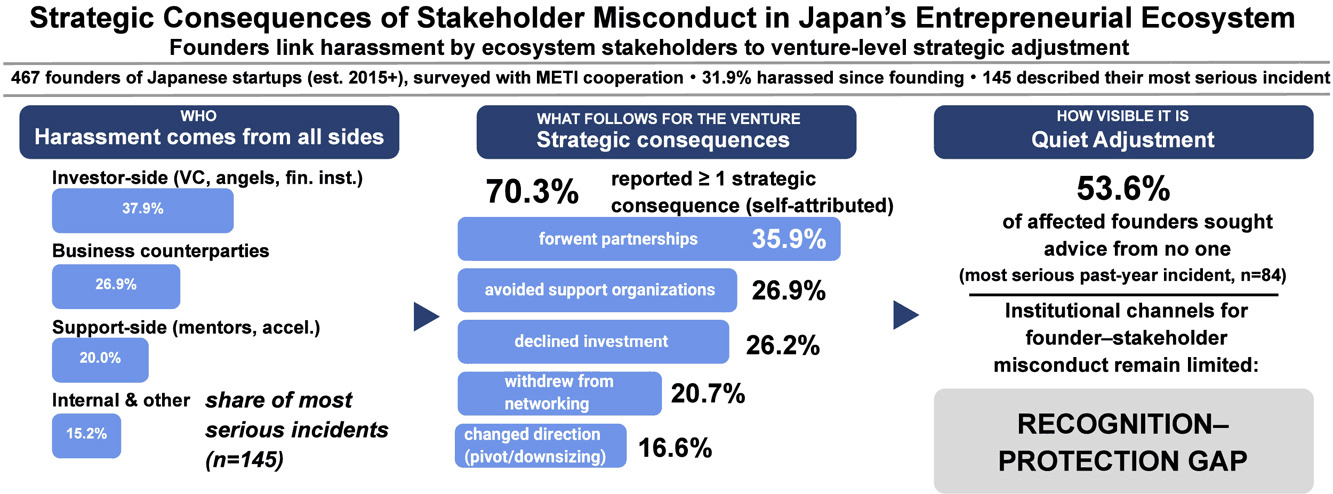
論文は、経済産業省の協力のもと4大学が共同で実施した調査から、2015年以降に設立された日本のスタートアップの起業家467名の回答を分析しています。投資家や取引先などから受けたハラスメントのうち最も深刻な出来事について回答した145名では、70.3%が、提携・協業の見送りや投資の辞退など、事業に関わる戦略的な帰結を少なくとも一つ報告しました。不適切行為の相手は投資家に限らず、取引先や支援者にも及んでいました。また、過去1年の最も深刻な出来事について回答した84名の半数以上(53.6%)は、誰にも相談していませんでした。ハラスメントを起業家個人の被害としてだけでなく、スタートアップの戦略に関わる問題として捉える必要を示した研究です。なお、分析は回答者本人の申告に基づく記述的なもので、因果関係を示すものではありません。
The paper analyses responses from 467 founders of Japanese startups established in or after 2015, collected in a survey that four universities conducted in cooperation with Japan's Ministry of Economy, Trade and Industry. Of the 145 founders who described their most serious experience of harassment by investors, business counterparties or other stakeholders, 70.3% reported at least one strategic consequence for the venture, such as forgoing a partnership or declining an investment. The perpetrators were not limited to investors but included business counterparties and support-side actors. More than half (53.6%) of the 84 founders who described their most serious incident in the past year had sought advice from no one. The study suggests that harassment should be seen not only as harm to individual founders but also as an issue for venture strategy. The analysis is descriptive and based on self-reports; it documents associations, not causal effects.
オープンアクセス(CC BY 4.0)で公開されており、誰でも全文を読むことができます。