2026年9月2日、慶應義塾大学 湘南藤沢キャンパス(SFC)の 公式YouTubeチャンネルと公式Instagramアカウント から、GIGAプログラムのプロモーション映像 「Study in Japan: Discover the GIGA Program at Keio University SFC」(約1分30秒)が公開されました。制作したのは、本研究会の卒業生である 中澤 愛莉(Airi Nakazawa) です。この映像は、マーケティング、市場分析、戦略提案という一連の作業の成果を、レポートではなく 映像作品 としてまとめた 卒業プロジェクト(GP) です。学内の手続きを経て、大学の公式チャンネルからの配信に至りました。
On 2 September 2026, a promotional film for the GIGA Program — "Study in Japan: Discover the GIGA Program at Keio University SFC", running about a minute and a half — was released on the official YouTube channel and Instagram account of Keio University's Shonan Fujisawa Campus (SFC). It was made by Airi Nakazawa, a graduate of this seminar. Her graduation project took marketing, market analysis and a strategy proposal through to a film rather than a report, and the university has taken it up for distribution on its own channels.
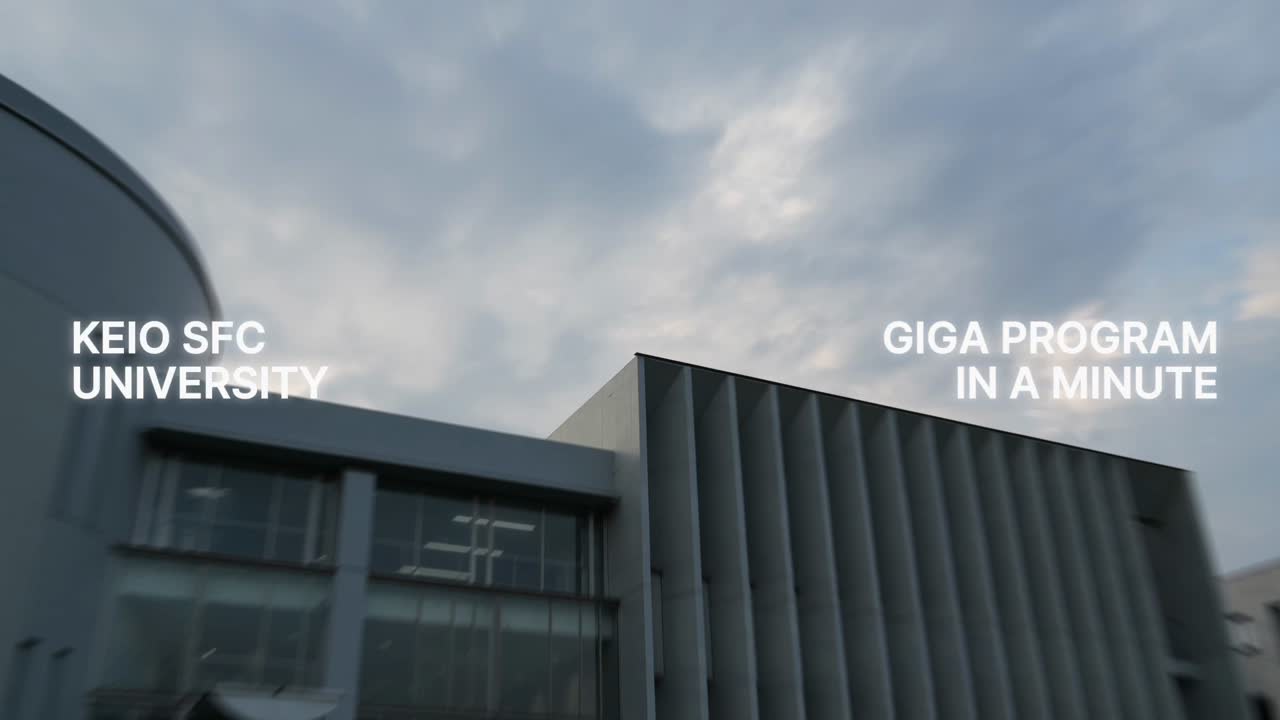
公開された映像 · The film as released
映像は、GIGAプログラムに在籍する学生と教員の声を軸に構成されています。YouTubeの概要欄には、SFCの国際担当(SFC International Affairs)の協力を得て制作されたと記載があります。Instagramではリール版も公開されました。いずれも下記からご覧いただけます。
The film is built around the voices of GIGA students and faculty. The YouTube description notes that it was made with the support of SFC International Affairs, and a Reel version is available on Instagram. Both are embedded below.
「GIGAとは何か」から「GIGAで学ぶとはどのような経験か」へ · From information to experience
企画の出発点は、既存の広報物との役割の違いを見定めることでした。GIGAプログラムには、専門的に制作された広報コンテンツがあります。ただし、その多くはプログラム概要、学生インタビュー、入試案内、カリキュラム説明といった 情報提供 を中心としており、すでにGIGAに関心を持っている層に対しては十分に機能します。残る課題は、GIGAという名前をまだ聞いたことがない層にどう届けるか です。
The project began by asking what the existing material does not do. GIGA already has professionally produced promotional content, but most of it is informational — programme overviews, student interviews, admissions guidance, curriculum explanations — and it works well for prospective students who are already interested in the programme. That leaves the question of how to reach someone who has not heard of GIGA at all.
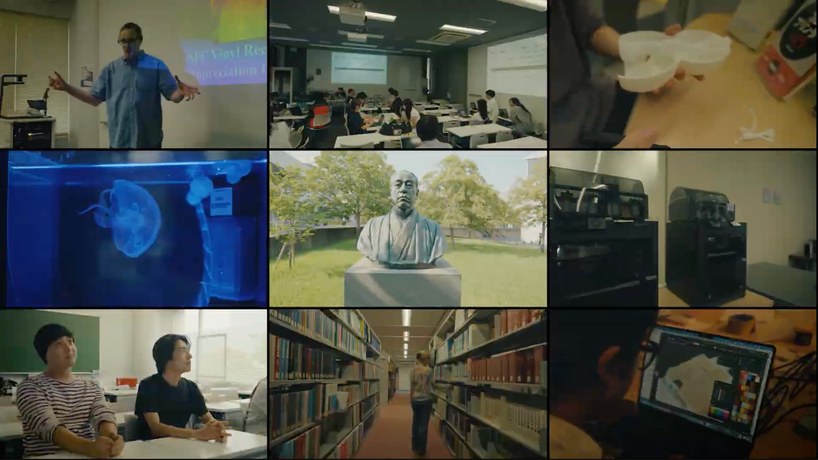
中澤は、扱う情報を増やすのではなく、映像が答えるべき問いを入れ替えることで、この課題に応えました。「GIGAとは何か」を説明する映像ではなく、「GIGAで学ぶとはどのような経験か」 を伝える映像として組み立てました。軸に据えたのは、好奇心、創造性、協働、イノベーション、研究文化の5点です。
Her response was not to add more information but to change the question. Instead of a film explaining what GIGA is, she designed one about what it feels like to study there, organised around five themes: curiosity, creativity, collaboration, innovation and research culture.
関心が生まれる前の段階 · The stage before awareness
提案書では、この設計の根拠として、学生の情報接触の順序が変わってきたことが挙げられています。従来想定されてきた経路は、大学のウェブサイトで情報を得て出願に至るというものでした。これに対して、TikTokやInstagramのリールで大学の情報に偶然触れ、関心を持ってから検索し、出願に向かう経路が併存しています。志望校を決める前の段階では、情報を伝えるのとは別の種類の接点が必要になります。
The proposal grounds this design in a change in the order in which students encounter a university. The route long assumed was that a student found the information on a university's website and went on to apply. Alongside it now runs another: a chance encounter on TikTok or Instagram Reels, followed by interest, a search and an application. On that reading, a point of contact of a different kind, one that is not primarily informational, is needed before a preference has formed.
あわせて、2点の先行研究が参照されています。Gonzalo-Hevia ほか(2024) は、Z世代がソーシャルメディア上のコンテンツを通じて教育機関を評価する際に、感情面の受け取り方がその評価を有意に左右することを示しています。Nguyen & Pham(2026) は、ソーシャルメディアへの接触が大学ブランドの認知と機関への同一化を介して、学生の支援的な行動に影響することを報告しています。映像の長さ、音の設計、カラーグレーディング、編集のリズムは、現在の短尺動画の作法に合わせています。いずれもこの2点の知見を踏まえた判断です。
The proposal cites two studies. Gonzalo-Hevia and colleagues (2024) find that emotional perception significantly shapes how Generation Z evaluates educational institutions through social-media content. Nguyen and Pham (2026) report that exposure to social media affects students' supportive behaviours, mediated by university brand and student–university identification. The decision to bring length, sound design, colour grading and editing rhythm closer to the conventions of contemporary short-form video was taken with these two findings in mind.
交渉と調整 · Negotiation and coordination
映像には映らないところで、多くの調整が必要でした。まず取りかかったのは、GIGAの教員への出演依頼です。中澤は一斉送信のメールを使わず、教員一人ひとりに個別に文面を書いています。それぞれの授業で学んだ具体的な内容や、その指導が自身の学部生活にどう影響したかを本文に書き添えています。手間はかかりましたが、依頼の趣旨が伝わりやすく、承諾を得られる割合も上がったと振り返っています。
A good deal of the work does not appear in the finished film. The first task was asking GIGA faculty to take part. Rather than sending a mass email, Nakazawa wrote to each professor individually, and each message referred to something specific she had learned in that professor's class, or to the way that teaching had shaped her time as an undergraduate. It took considerably longer, but she found that it made the purpose of the request easier to convey and raised the proportion of those who agreed.
もう一つの関門は、SFCのメディアセンターでの撮影でした。構想していたカットの多くは館内で撮る必要がありましたが、そこには撮影禁止の掲示があり、当初は依頼そのものを躊躇したといいます。卒業プロジェクトの趣旨を説明して相談したところ許可が下り、撮影許可証 が発行されました。撮影中はこれを着用しました。掲示だけを見て諦めず、正式に手続きを踏んで相談したことが、撮影できる範囲を広げました。
The other obstacle was filming inside the SFC Media Center. Many of the shots she had in mind required access to it, but signs inside the building state that photography and filming are prohibited, and at first she hesitated even to ask. When she did explain the purpose of her graduation project, the request was approved and she was issued an official filming permit, which she wore while shooting. What she took from it was that a request made through the proper channels, with the work explained, meets a more open response than the signage suggests.
撮影と仕上げ · Filming and post-production
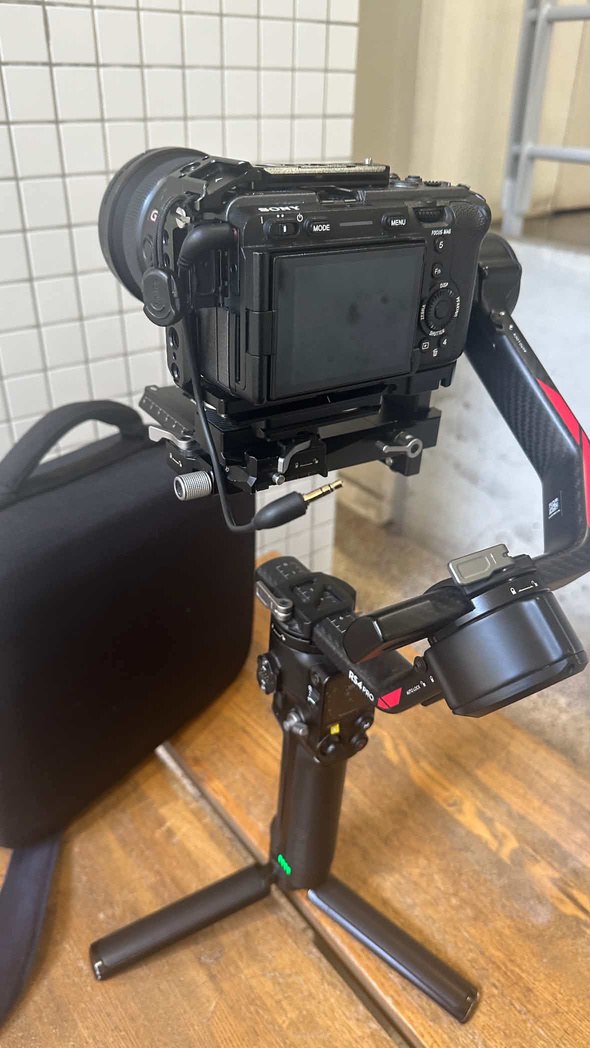
主な撮影機材は、研究会のメンバーから借りた Sony FX3 シネマラインカメラです。DJI Ronin RS4 Pro ジンバルと組み合わせて撮影しました。収録は 4K・60fps、カラープロファイルは S-Log です。S-Logで収録するとダイナミックレンジが確保され、ポストプロダクションでのカラーグレーディングの自由度が上がります。学生と教員のインタビューの見え方を映像全体で揃えるための選択でした。
The main camera was a Sony FX3 Cinema Line body borrowed from a fellow seminar member, paired with a DJI Ronin RS4 Pro gimbal. Footage was recorded in 4K at 60fps using Sony's S-Log profile, which preserves a wider dynamic range and leaves more room for colour grading afterwards. The aim was to keep the student and faculty interviews consistent in appearance across the film.
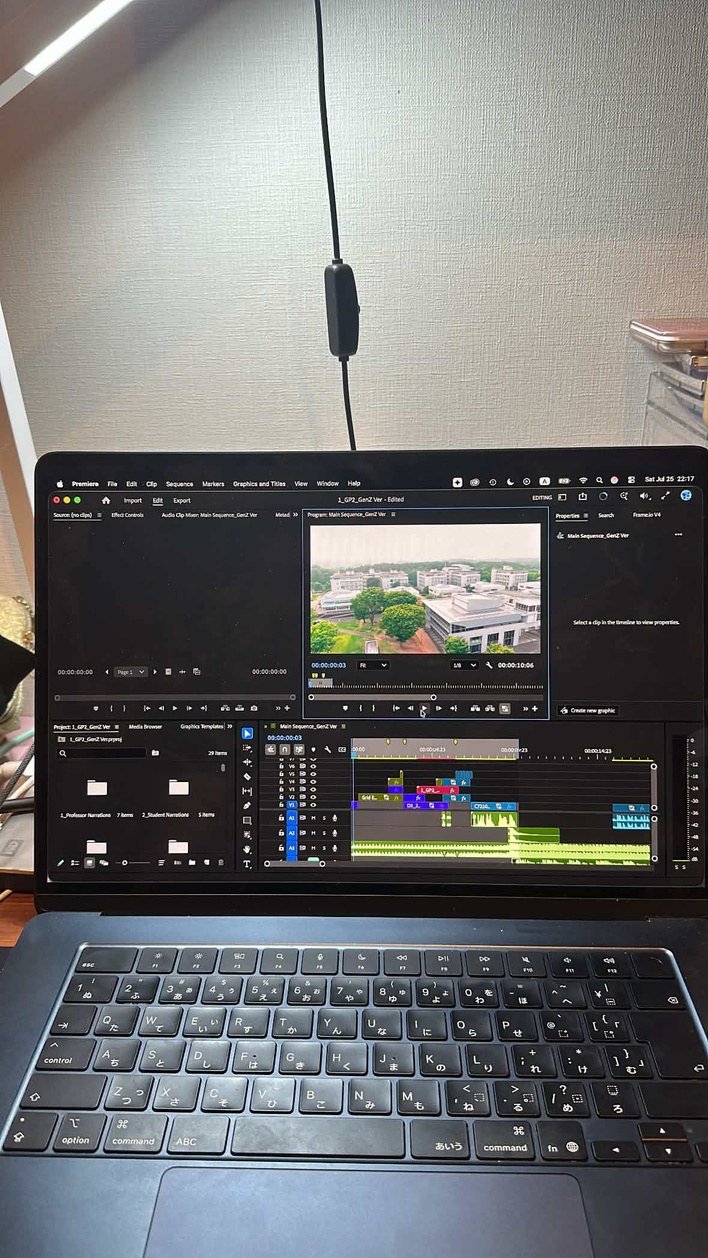
編集は Adobe Premiere Pro で素材整理からタイムライン構築、音声の同期までを行い、モーショングラフィックス、テキストアニメーション、トランジションは After Effects で作成しています。
Editing was done in Adobe Premiere Pro — organising the footage, assembling the timeline, syncing audio — while the motion graphics, text animation and transitions were built in After Effects.
音楽とフォントは、この映像が慶應義塾の公式アカウントから配信されることを前提に選びました。私立教育機関での利用が認められるライセンスを購入し、効果音についても同様に許諾を得ています。フォントも使用可能なものに限定しています。中澤には企業向けの映像制作の経験があり、権利処理を先に済ませておく必要を知っていたためです。
Music and fonts were chosen on the assumption that the film would be published from an official Keio account. She purchased a licence that permits use by private educational institutions, obtained the equivalent clearance for sound effects, and restricted herself to fonts licensed on the same terms. She had learned from producing video for companies that rights are best settled at the outset.
SFCのロゴと、研究会のクレジット · The SFC mark, and the seminar's credit
映像はSFCのアイデンティティを前面に置く構成であるため、公式ロゴの扱いについてSFCの総務担当(General Affairs Office)に相談しています。大学からはヴィジュアル・アイデンティティ(VI)ガイドラインが示され、ロゴの表示方法と使用条件が確認されました。あわせて、この映像が大学の公式制作物ではなく学生主導の卒業プロジェクトであることを明示するよう 求められました。これに対応するため、SFCのロゴと並べて、制作者名と所属する研究会(琴坂研究会 / IBER-Kotosaka)を併記し、ロゴ使用の正式な許諾を得ています。
Because the film places the SFC identity so prominently, she consulted the General Affairs Office about use of the official logo. The university supplied its visual identity (VI) guidelines, setting out how the mark may be displayed and under what conditions, and asked that the film state clearly that it is a student-led graduation project rather than an official university production. To meet that condition, she placed her own name and that of her research seminar (IBER-Kotosaka) alongside the SFC branding, and received formal approval to use the logo.
改訂の過程では、琴坂からGIGAプログラム公式サイトへのQRコードを入れる提案があり、これを採用しました。映像を見て関心を持った人が、そのままGIGAプログラムの公式情報にたどり着けます。映像を見て終わりにせず、次の行動につなげるための変更でした。
During revision, Kotosaka suggested adding a QR code pointing to the official GIGA Program website, and she adopted it. A viewer whose interest the film catches can now go straight to the programme's own pages, so that the film leads to a next step rather than ending as a self-contained piece of promotion.
研究会の成果として · As an output of the seminar
この映像と、あわせて作成されたマーケティング戦略レポートは、2026年7月31日から8月2日にかけて静岡県伊東市で開催した 研究会の夏合宿 で、卒業プロジェクトとして発表されました。その後、正式な使用と配信に必要な手続きをGIGAオフィスとの間で進め、9月2日に公開されました。
The film, together with the marketing strategy report that accompanies it, was presented as a graduation project at the seminar's summer retreat in Ito, Shizuoka, from 31 July to 2 August 2026. The clearances needed for official use and publication were then completed with the GIGA Office, and the film was released on 2 September.
卒業プロジェクトは、研究会での議論を各自の関心に沿って形にする取り組みです。今回の成果は、マーケティングの理論と市場分析を出発点としながら、最終的な形式として映像作品を選び、権利処理と学内調整まで自ら進めて完成させた点に特徴があります。制作は無償で行い、学術的な貢献として位置づけています。
A graduation project is the work of giving the seminar's discussions a form that follows each student's own interests. What distinguishes this one is that it started from marketing theory and market analysis, chose a film rather than a report as its final form, and carried the work through rights clearance and internal university coordination to completion. It was produced free of charge, as an academic contribution.
出典と関連リンク · Sources and links
提案書で参照されている先行研究は以下の2点です。
- Gonzalo-Hevia, N., Gómez-Jorge, F., & Jaén-Pozo, R. (2024). Advertising and Reputation in Educational Institutions: Emotional Perception of Generation Z on Social Media. Pensar la Publicidad, 18(2), 3–13. https://doi.org/10.5209/pepu.106931
- Nguyen, T. K. O., & Pham, H.-T. (2026). Perceived social media exposure and students' supportive behaviours: The mediating effect of university brand and student–university identification. Current Psychology, 45.