2026年4月18日(土)、琴坂研究会は、慶應義塾大学大学院 経営管理研究科(KBS)芦澤ゼミ との 合同ゼミ を、慶應義塾 三田キャンパスで開催しました。テーマは 「スタートアップ・エコシステムにおける経営戦略」。国際経営・経営戦略・アントレプレナーシップ を研究領域とする琴坂ゼミと、スタートアップM&A を中心に研究を進める芦澤ゼミとが、同じテーブルで 「政策の側」と「企業実務の側」の両方の論点 を持ち寄り、相互に発表とフィードバックを重ねました。学部とビジネススクールという異なる文脈の研究室が、同じスタートアップ・エコシステムを別々の視座から扱う、刺激の濃い半日となりました。
On Saturday 18 April 2026, the IBER-Kotosaka Lab held a joint seminar with the Ashizawa Lab of the Keio Business School (KBS) at Keio's Mita campus. The theme was "strategic management within the startup ecosystem." The Kotosaka Lab — working in international business, strategic management, and entrepreneurship — and the Ashizawa Lab — focused on research into startup M&A — sat at the same table, brought both the policy-side and the firm-side angles into the room together, and traded presentations and feedback. An undergraduate research lab and a business-school lab — operating from different institutional contexts on the same startup ecosystem — made for a half-day with unusually high signal density.
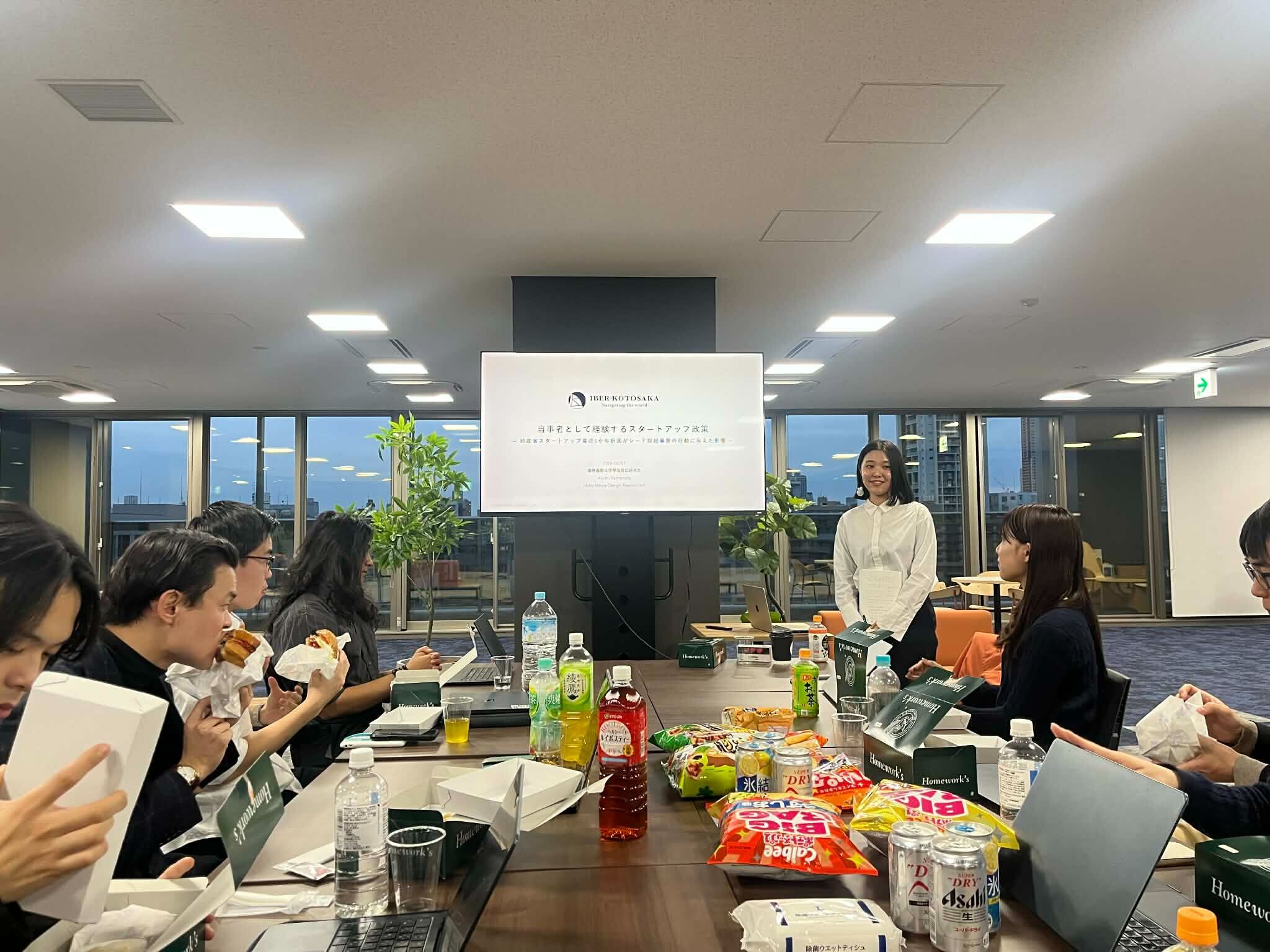
三田キャンパスで、SFCとKBSが交差する · SFC and KBS meeting at the Mita campus
琴坂研究会の本拠地は 湘南藤沢キャンパス(SFC) ですが、今回の合同ゼミは 三田キャンパス での開催となりました。三田は、慶應義塾の本キャンパスであると同時に、KBS(経営管理研究科)の本拠地でもあります。SFCの学部生と、KBSの大学院生が、同じ大学の中の異なるキャンパス・異なる教育課程に属しながら、同じ研究関心を共有して一日を過ごす ── 慶應義塾という枠組みの中で初めて可能になる、特殊な形式の研究交流でした。
The IBER-Kotosaka Lab is based on the Shōnan-Fujisawa Campus (SFC), but this joint seminar was held at the Mita campus — Keio's main campus and the home of KBS (the Graduate School of Business Administration). SFC undergraduates and KBS graduate students, sitting in different campuses and different programmes within the same university, came together for a day around a shared research interest. It is a particular form of research exchange that becomes possible only inside the Keio frame.
会場は三田キャンパス内のセミナー室。両ゼミの学生がそれぞれ会場入りし、互いに簡単な自己紹介を交わしたあと、午後のプログラムが始まりました。琴坂ゼミからはスタートアップ政策の当事者分析やユニコーン企業の資金調達・公共調達の最新動向 を、芦澤ゼミからはスタートアップM&Aの実態に関する研究 を、それぞれ複数のテーマで発表する、という構成です。
The venue was a seminar room at the Mita campus. Students from both labs arrived, exchanged short introductions, and the afternoon programme began. The structure was straightforward: the Kotosaka Lab presented a stakeholder analysis of startup policy and the latest developments in unicorn-company financing and public procurement; the Ashizawa Lab presented its research on the realities of startup M&A. Multiple sub-themes were prepared on each side.
琴坂ゼミからの発表 — スタートアップ政策と公共調達 · Kotosaka Lab presentations — startup policy and public procurement
琴坂ゼミからは、研究会の中で継続的に追ってきた スタートアップ政策の当事者分析 と、ユニコーン企業の資金調達と公共調達の最新動向 を発表しました。これは、研究会が 非市場戦略(規制・制度・公共政策と経営戦略の関係)に継続的な関心を払ってきた延長線上にあるテーマで、政府が 「スタートアップ育成5か年計画」 等で打ち出す政策が、実際にどのような関係者を動員し、誰に対してどのような効果を持ちうるかを、当事者の構造から読み解く内容です。
From the Kotosaka Lab side, the presentations covered work the seminar has been pursuing continuously: stakeholder analysis of startup policy and the latest developments in unicorn-company financing and public procurement. This sits in the lab's longer-running interest in non-market strategy — the interaction of regulation, institutions, and public policy with corporate strategy. The presentations read government initiatives — for example the "Five-Year Plan for Startup Development" — through the structure of who is actually mobilised, on whom the policies act, and to what effect.
とくに学生からの発表で深く扱ったのが、公共調達 の領域でした。スタートアップにとって、初期顧客としての政府・自治体は、単なる売上以上の意味を持ちます。(i) 商品・サービスの社会実装の試金石として、(ii) 信用補完としての 「政府機関が顧客であること」 のシグナリング効果、そして (iii) その後の民間市場展開のレファレンスとして。これらが組み合わさる構造を、ユニコーン企業の事例ベースで丁寧に解いていく、という発表内容でした。芦澤ゼミの院生の方々からは、「公共調達の文脈は、企業価値評価の場面でどう織り込まれるべきか」「M&Aの売り手・買い手側にとって、公共調達の依存度はどのリスクとして評価されるか」といった、実務直結のフィードバックが返されました。
One area the student presentations dug into especially deeply was public procurement. For a startup, the government — central and local — as an early customer carries weight beyond simple revenue. (i) as a proving ground for the social implementation of a product or service; (ii) as a signalling effect of trust — that "a government body is the customer" functions as credit enhancement; and (iii) as a reference for subsequent expansion into the private market. The presentations carefully unpacked these layered effects through unicorn case studies. The KBS graduate students returned operationally direct feedback: how the public-procurement context should be reflected in valuation; on the seller and buyer sides of an M&A, how dependence on public procurement should be assessed as risk.
芦澤ゼミからの発表 — スタートアップM&Aの実態 · Ashizawa Lab presentations — the realities of startup M&A
続いて、KBS芦澤ゼミからは、スタートアップM&Aの実態 に関する一連の研究発表が行われました。芦澤ゼミは、社会人大学院生を中心とした構成で、各人が実務でM&Aの現場に近い経験を持っているケースも多く、研究の射程は 「アカデミックな枠組み」と「実務の手触り」を同時に走らせる 種類のものとなりました。発表テーマには、買収後のPMI(Post Merger Integration)の実態、創業者と買い手側経営陣の関係、M&A時の価値評価における無形資産の扱い、といった論点が含まれました。
From the KBS Ashizawa Lab side, a series of presentations followed on the realities of startup M&A. The Ashizawa Lab is composed largely of working professionals as graduate students, many of whom have direct experience close to the M&A field, and the research consequently runs "academic frameworks and operational texture in parallel." The presentation themes spanned the realities of post-merger integration (PMI), the relationship between founders and the acquiring company's leadership, and the treatment of intangible assets in valuation at the time of an M&A.
琴坂ゼミの学部生からは、「学部段階で読んできた経営戦略論の論文の中で、PMIや無形資産の扱いはかなり抽象度高く論じられているが、現場ではどの程度まで定式化されているのか」「スタートアップ側の創業者の意思決定プロセスは、M&A交渉のどの段階で、どのような形で買い手側に伝わっているのか」といった、研究と実務の接続点を探る質問が複数出されました。社会人院生の方々からの応答は、教科書的な枠組みの内側にどの程度の 幅と例外 があるかを具体的に示すもので、学部生にとっては経営戦略論が 「整理された理論」と「整理されきらない現実」 の間でどう動いているかを、目の前で見られる時間となりました。
The undergraduate students from the Kotosaka Lab put a number of questions to the floor — questions that probed the join between research and practice. "PMI and the treatment of intangible assets are discussed at a fairly high level of abstraction in the strategic-management literature one reads at the undergraduate stage; how formally codified are they actually in the field?" "At what stage in an M&A negotiation, and through what channels, do the decision-making processes of the founder reach the acquiring side?" The responses from the working-professional graduate students made vivid how much range and how many exceptions sit inside the textbook frames. For the undergraduates, the day became a chance to watch, at first hand, how strategic management actually moves between "organised theory" and "reality that resists being organised."
理論と実務の交差を、議論として運ぶ · Carrying the crossing of theory and practice as a discussion
合同ゼミの全体を振り返ると、最も特徴的だったのは、「政策・公共調達側からスタートアップを見る視座」(琴坂ゼミ)と、「M&A・PMI側からスタートアップを見る視座」(芦澤ゼミ)が、同じテーブルの上で並んだことでした。スタートアップ・エコシステムは、しばしば 「資金調達の話」 や 「プロダクトの話」 として語られますが、実際にはその両端に、政策的に組み立てられる初期需要 と、M&Aによって精算される後期の出口 が存在します。今回の合同ゼミは、その両端を同時に視野に入れる、という意味でも、研究会の通常運営では作りにくい構図でした。
Looking back at the joint seminar as a whole, the most distinctive feature was that "a policy- and public-procurement-side view of startups" (Kotosaka Lab) and "an M&A- and PMI-side view of startups" (Ashizawa Lab) sat side by side on the same table. The startup ecosystem is often discussed in terms of "financing" or "product", but at either end of that ecosystem sit policy-built early demand and M&A-mediated late-stage exits. The joint seminar held both ends in the field of view simultaneously — not a configuration the seminar's regular operation can manufacture.
議論の中では、両ゼミに共通する論点も浮かび上がりました。たとえば、「スタートアップの企業価値評価において、無形資産(人的資本、組織能力、知的財産、規制との関係性)はどう測られるべきか」 という問いは、政策側の議論にも、M&A側の議論にも、共通して立ちはだかる論点です。両ゼミ生が交互に発言する中で、この共通課題が、今後の研究テーマとして双方の関心の重なるエリアであることも見えてきました。
Common ground also surfaced. The question of "how to measure intangible assets — human capital, organisational capability, intellectual property, relationships with regulation — in the valuation of a startup" bears down on both the policy-side and the M&A-side discussions. Speaking in alternation, students from the two labs began to see that this common problem sat in the area where their future research interests overlap.
研究会としての位置づけ · How the seminar reads this session
琴坂研究会としては、KBS芦澤ゼミとの合同ゼミは、学部とビジネススクールという異なる教育課程の研究会が、同じ研究テーマを別の視座から扱う 形式の、貴重な場となりました。学部生にとっては、社会人院生の 実務に裏打ちされた研究言語 に触れる経験は、自分たちが今後どのような形で研究と実務をつないでいくかを考える上で、強い参照点になります。同時に、芦澤ゼミの院生の方々からは、学部生による 「政策の構造を当事者分析として読み解く」 形式の研究について、興味深い問いが多数返されました。
For the IBER-Kotosaka Lab, the joint seminar with the KBS Ashizawa Lab made a valuable setting in which research labs from two different educational programmes — undergraduate and business-school — engage the same research theme from different vantage points. For the undergraduates, exposure to the research language grounded in operational experience of the working-professional graduate students becomes a strong reference point as they think through how, in future, they will bridge research and practice. The graduate students of the Ashizawa Lab, in turn, brought back many interesting questions about the undergraduate-led format of "reading the structure of policy as stakeholder analysis."
慶應義塾は、学部からビジネススクールまで、研究の幅広い段階を内包する組織です。今回の合同ゼミは、その内側にある研究関心の重なりを、研究室レベルで具体的に取り出してみる試みでもありました。今後も、こうした塾内・他研究科との合同ゼミを、形式として再生産していけるよう、設計していきたいと考えています。
Keio holds research at every level, from the undergraduate to the business-school stage, inside a single institution. The joint seminar was, in part, an attempt to make the overlapping research interests within the institution concrete at the lab-to-lab level. We intend to keep this kind of joint seminar — with other graduate schools and other labs inside Keio — reproducible in form as the seminar moves forward.